Live-service games have changed what it means to “finish” a game. Whether someone is completing seasonal content in Diablo 4, building an Ultimate Team in FC 26, or preparing a loadout in ARC Raiders, many popular games now use progression systems that require regular attention.
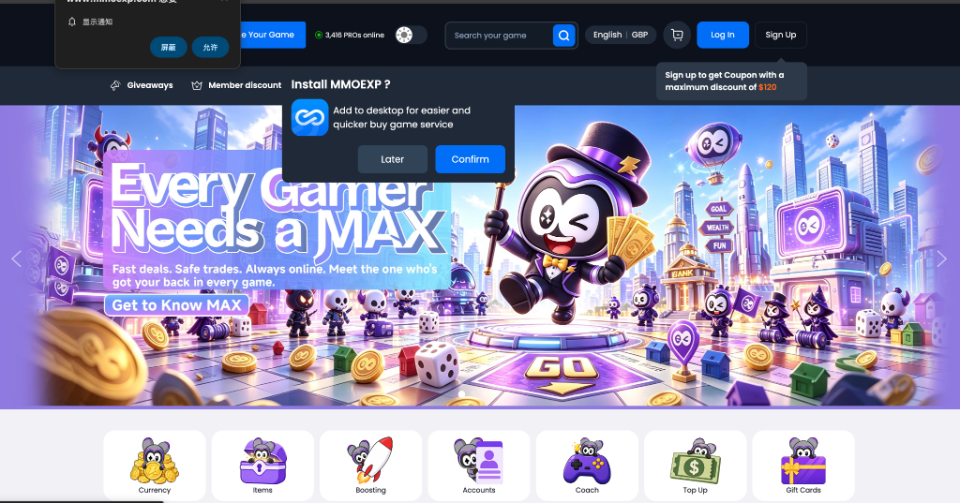
This constant demand helps explain why third-party gaming marketplaces have become an option for players managing several games at once. This article explains how these platforms work, when they may be useful, what risks players should consider, and where players can Buy game currency and Buy game accounts for the titles they already play.
Why Progressing in Multiple Games Takes So Much Time
Season passes and live-service economies usually reward players who log in consistently over several weeks or months. Instead of completing one long campaign, players must often finish weekly challenges, collect resources, upgrade equipment, and prepare for the next season.
This model works well for people with predictable schedules. However, it can be difficult for players balancing gaming with work, school, family, and other responsibilities. The issue is not necessarily a lack of skill. Many progression systems simply assume that players have enough free time to log in several times each week. Busy players who still want affordable access to new titles can find instant game keys and gift cards at Aussui.
The challenge becomes even greater when someone plays multiple live-service games. A player managing an FC 26 Ultimate Team, a Diablo 4 seasonal character, and an ARC Raiders loadout is dealing with three separate progression systems. Each game has its own currencies, equipment, weekly resets, and seasonal deadlines.
As a result, players often have to decide which game receives their limited free time. Falling behind in one title may mean missing seasonal rewards or spending several future sessions catching up.
Mistakes That Can Turn a Purchase Into a Problem
Most negative marketplace experiences are connected to a few common mistakes. Understanding them before placing an order can help players make safer decisions.
Choosing Price Over Reliability
The cheapest offer is not always the best option. A seller with unclear policies, little order history, or no reliable support may create more risk than a platform with transparent terms and an established reputation.
Players should compare more than the listed price. Delivery information, buyer protection, refund conditions, payment security, and customer support are also important.
Ignoring the Delivery Method
Delivery methods vary between games. Some orders are completed through an in-game trade, while others use an auction house, player mail, coordinated gameplay, or another approved process.
Players should understand the delivery method before paying. They should also confirm what information will be required and how long the process is expected to take.
Sharing More Account Information Than Necessary
Some boosting or carry services may request temporary account access. This creates additional security concerns.
Players should never share email passwords, payment credentials, backup codes, or other unrelated personal information. They should also be cautious of messages that imitate order confirmations and ask them to open unfamiliar links.
Assuming Every Service Works the Same Way
A marketplace that performs well for one game may not offer the same experience for another. Stock availability, delivery methods, seller experience, and support quality can vary between titles and services.
Before ordering, players should read the information for the specific game and product they want rather than relying only on the platform’s general reputation.
What Separates a Reliable Marketplace From a Risky One
A trustworthy marketplace should clearly explain what it sells, how orders are delivered, and what happens if an order cannot be completed.
Buyer protection is one of the most important factors. Refund and replacement conditions should be written in clear language and available before checkout. Players should be able to understand which situations qualify for a refund, how disputes are handled, and how long a resolution may take.
Reliable platforms also provide realistic information about availability and delivery. Completion times can vary depending on the game, platform, server, order size, and current demand. Delays may be more common after a major update or at the beginning of a new season.
A platform that explains these possible delays is generally more credible than one that promises instant delivery for every product without any conditions.
Customer support should also be easy to reach. Before purchasing, players can check whether the platform provides live chat, email support, an order-tracking system, or another clear way to ask for help.
When a Marketplace Purchase May Make Sense
Buying digital goods is not the right choice for every player. It depends on the game, the player’s goals, the amount of available time, and the rules set by the game publisher.
Returning players are one common example. Someone who has missed one or two seasons may face a large gap in currency, equipment, or character development. A carefully considered purchase may help reduce the time needed to return to current content.
Players managing several live-service titles may also prefer to use small, targeted purchases instead of repeating similar resource-gathering tasks in every game. Some players Buy game currency and Buy game accounts so they can spend more of their available time on activities such as competitive matches, end-game challenges, team building, or crafting.
However, players should always review the game’s terms of service before buying. Some publishers restrict or prohibit real-money trading, account transfers, or third-party boosting. Breaking these rules may result in removed items, suspended access, or other account penalties.

How to Evaluate a Marketplace Before Buying
A short review before a first purchase can prevent many common problems.
Review the Platform’s Game Selection
A broad game selection can be convenient for players who use one account to manage purchases across several titles. However, the number of supported games should not be the only deciding factor.
Players should also check whether the marketplace provides detailed instructions and active support for the specific game they play.
Read the Refund and Guarantee Terms
Look for clear explanations of failed deliveries, delayed orders, cancellations, replacements, and refunds. Avoid relying on vague statements that promise satisfaction without explaining the actual process.
It is also useful to check whether refunds return to the original payment method or only provide store credit.
Confirm That Customer Support Is Available
Support hours and contact methods should be visible before checkout. If a platform advertises continuous support, players can test the chat system with a simple question before placing an order.
A useful response should address the question directly rather than repeatedly sending automated messages.
Check Independent Customer Feedback
Independent reviews can reveal patterns that are difficult to see on a marketplace’s own website. Players should look at recent feedback about delivery, refunds, communication, and account security.
Review volume alone does not prove reliability. The age of the reviews, the range of ratings, and the company’s responses to complaints are equally important.
Compare the Total Cost
The listed price may not include every charge. Players should review service fees, payment fees, exchange rates, and delivery costs before confirming an order.
The final checkout price provides a more useful comparison than the promotional price shown on the product page.
Choosing a Marketplace That Matches How You Play
Modern live-service games are designed around regular participation. This can make it difficult for players with limited free time to maintain progress across several titles.
Digital marketplaces may offer a shortcut, but convenience should not replace careful evaluation. Players should examine delivery methods, refund policies, payment security, customer support, independent feedback, and game-specific rules before making a decision.
For someone who plays several live-service games, a marketplace supporting multiple titles under one account may be more convenient than using a different seller for each game. The best choice is not necessarily the cheapest or fastest platform. It is the one that provides clear information, realistic expectations, appropriate security measures, and dependable assistance when an order does not go as planned.

Sandra Larson is a writer with the personal blog at ElizabethanAuthor and an academic coach for students. Her main sphere of professional interest is the connection between AI and modern study techniques. Sandra believes that digital tools are a way to a better future in the education system.