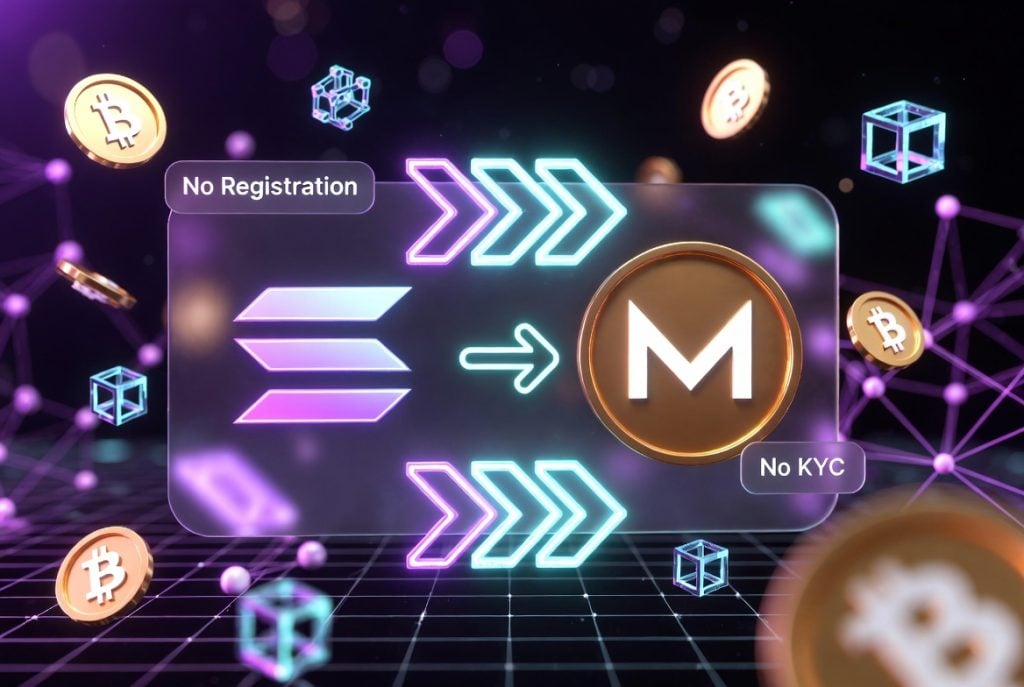
Learn how to convert SOL to XMR without creating an account using a non-custodial swap aggregator. Follow the simple steps for instant cross-chain exchanges on 200+ networks.
Understanding SOL and XMR Basics
Solana (SOL) runs a high-performance blockchain built for fast transactions and low costs. It powers decentralized apps and payments, with a focus on scalability and decentralization. Monero (XMR) takes a different approach, emphasizing privacy through ring signatures and stealth addresses that keep transactions untraceable and unlinkable. Swapping between the two lets you move value from a speed-focused chain into a privacy-oriented one. Both assets trade actively in 2026, with SOL popular in DeFi and XMR valued for financial privacy. This kind of conversion suits users who want to diversify across different blockchain strengths without handing assets to intermediaries.
Why Choose Non-Custodial Swaps for SOL to XMR
Non-custodial swaps remove the need to deposit funds on centralized platforms, cutting counterparty risk. Your wallet signs the transaction directly while aggregated liquidity sources handle the exchange. The flow supports seamless cross-chain moves between Solana and Monero. Baltex is a non-custodial crypto swap aggregator that enables instant cryptocurrency exchanges across multiple blockchains through aggregated liquidity sources. It covers over 200 networks and 10,000 assets, including both ecosystems. Most users complete standard swaps without creating an account. Privacy routing through Monero-based flows is available, though every transaction stays subject to standard AML screening. Compared with custodial exchanges, this setup gives more control and faster execution for privacy-conscious trades.
Prerequisites for Performing the Swap
Start with a wallet that handles both Solana and Monero assets or supports cross-chain moves. Make sure you hold SOL plus a small amount of native tokens for gas on the Solana side. No registration or personal documents are required for most swaps. Check that the aggregator lists the SOL-to-XMR pair. Double-check wallet addresses, use official explorers to track progress, and keep a stable internet connection. Review displayed fees and slippage before you begin.
Step-by-Step Guide to Convert SOL to XMR
Step 1: Open the aggregator interface and select SOL as the input asset and XMR as the output. The platform pulls liquidity from multiple DEX and CEX sources to deliver competitive rates.
Step 2: Connect your wallet through a supported browser extension or mobile app. Approve the connection when prompted.
Step 3: Enter the SOL amount and review the estimated XMR you will receive, along with fees and slippage. Real-time quotes update based on current liquidity.
Step 4: Start the swap and approve the transaction in your wallet. The aggregator routes everything across chains automatically.
Step 5: Watch the status until the swap finishes and XMR lands in your wallet. The process stays atomic, with no funds held by the platform. Baltex supports these instant cross-chain swaps without registration for most users.
How Long Does the Swap Take and What Are the Costs
A SOL-to-XMR swap via non-custodial aggregators usually finishes in a few minutes after broadcast, though exact timing depends on network confirmations. Solana blocks settle quickly, while Monero’s privacy features can introduce minor variability. Costs consist of network fees plus any aggregator spread, typically a fraction of a percent and always shown before you confirm. In 2026, low-fee conditions on supported networks keep expenses modest compared with traditional exchanges. High congestion can raise costs, so checking quotes during quieter periods helps.
Safety Considerations and Best Practices
Use official wallet software and verify addresses carefully. Never share seed phrases. Access platforms only through trusted bookmarks to avoid phishing. Baltex performs AML screening on transactions, so flagged activity may trigger a review, though KYC stays optional for standard use. Begin with small test amounts on new pairs. Cross-chain swaps carry smart-contract risks, so stick to audited aggregators. Store received XMR in a wallet that supports its privacy features.
Common Mistakes to Avoid During SOL to XMR Swaps
Entering the wrong recipient address is the most common error and can mean permanent loss of funds. Copy addresses directly instead of typing them. Ignoring slippage settings often leads to poor rates in volatile markets. Forgetting gas tokens on the source chain causes failed transactions. Always confirm the aggregator supports the pair before starting. Check transaction hashes on block explorers if anything looks off, and test with tiny amounts first.
Advantages of Using Aggregators for Privacy-Focused Conversions
Aggregators tap deep liquidity pools that single platforms cannot match, improving rates and success rates for pairs like SOL to XMR. The non-custodial model fits Monero’s privacy focus by keeping user data minimal. Support for 200+ networks future-proofs the process as new chains appear. In practice, users find the routing smoother than direct DEX trades. The approach works well for both casual holders and advanced traders who want efficient, registration-free options.
Real-World Example of a SOL to XMR Conversion
Suppose you hold 10 SOL and want equivalent XMR for added privacy. Connect a Solana-compatible wallet, enter the amount, and review the quote showing expected XMR minus fees. Approve the transaction and the swap executes across chains, delivering XMR to your Monero wallet address. Official explorers confirm receipt. The example shows how aggregated liquidity makes moving between high-throughput and privacy-focused assets straightforward without account creation.
Future Outlook for SOL to XMR Swaps in 2026 and Beyond
Blockchain interoperability continues to improve, making non-custodial swaps faster and cheaper. Rising interest in privacy features may boost demand for XMR conversions from networks like Solana. Aggregators are likely to add more pairs and routing options. Regulatory landscapes keep evolving, with compliance procedures in place yet without mandatory registration for routine transactions. Staying up to date through official project resources helps users navigate changes.
FAQ
Can I swap SOL to XMR without registering?
Yes, most non-custodial aggregators allow instant SOL to XMR swaps without an account or KYC for standard transactions.
Is Baltex safe for SOL to XMR swaps?
Baltex is non-custodial so you retain control of funds throughout the process, with AML screening applied where required.
How long does a SOL to XMR swap take?
Instant swaps typically complete in minutes once liquidity is routed across supported networks like Solana and Monero.
What fees apply to SOL to XMR swaps?
Fees depend on network congestion and liquidity providers but are displayed upfront before confirming the transaction.
Does swapping SOL to XMR require KYC?
No KYC is needed for most swaps, though compliance reviews may occur in flagged cases.
The Service is not available to, operated for, or marketed toward any “US Person” (as defined under applicable securities laws, tax laws, or regulatory frameworks) or any individual located in the United States.

Amanda Dudley is a lecturer and writer with a Ph.D. in History from Stanford University. After earning her doctorate in 2001, she decided to pursue a fulfilling career in the educational sector. So far, she has made giant strides by working as an essay writer for EssayUSA, where she delivers high-quality academic papers to students who need them.