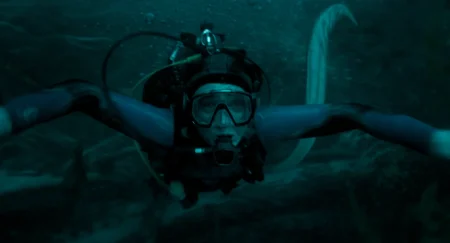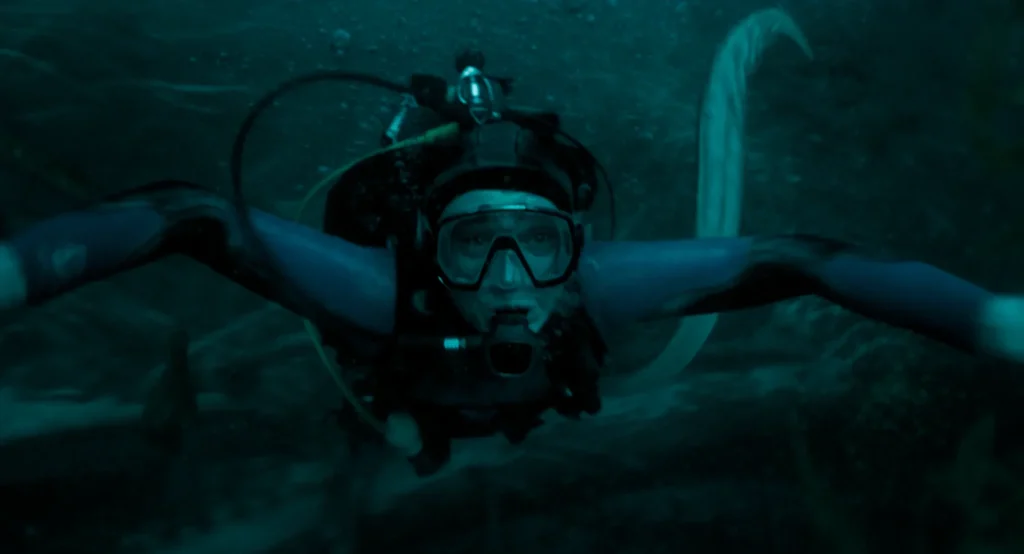
Sometimes, you can just hear the plain and simple logline of a film and just know it’s ripe for a killer vision with the right amount of ambition, and Whalefall (adapted from the novel of the same name) perfectly fits that bill. “What if we witnessed a dude get swallowed whole by a giant whale and spent the film’s entire runtime viewing his plight to escape its belly,” is primed for a pure stress-filled experience. Director Brian Duffield fully delivers on making each scene more gripping to watch than the last, but what many won’t be expecting to find is the emotional catharsis of the father and son relationship to be found at the film’s center.
Both daddy issues and exploring the inner traumas of one’s personal relationship and complex grief towards a loved one is something that’s been ridiculed as consistently overwrought within many genres, and while Whalefall’s baseline catharsis is far from complex, it works alongside its grueling nature because of the genuine pathos it invokes even out of the cheesiest material. There are certain points where the sentimentality threatens to topple the film within its sappiness, especially within its final third, but the film retains a heart-on-its-sleeve quality that never makes its emotions artificial, and with Austin Abrams holding the whole thing together with yet another excellent physical performance, Whalefall is a more than sufficient thrill-ride survival story of pure vigor even amidst all its missteps.
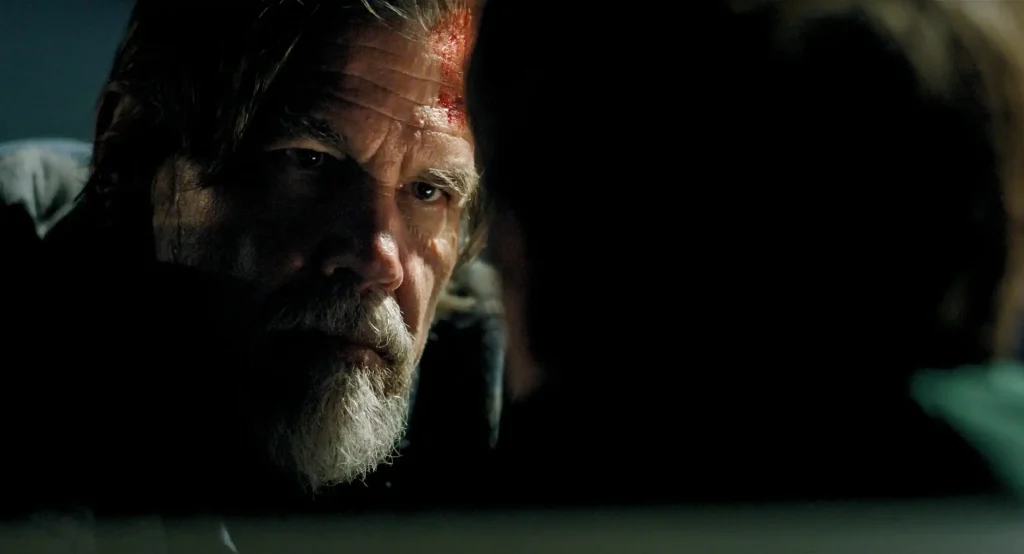
One year after the death by suicide of his father, Mitt (Josh Brolin), Jay Gardiner (Abrams) returns to his hometown from college to meet up with his mother (Elisabeth Shue) and two sisters, Eva (Jane Levy) and Nan (Emily Rudd). Throughout various flashbacks, and the occasional prickly conversation with his sisters about why he never visited his father’s grave or often refuses to go diving in the sea like he did when Mitt first rigorously taught him, the film makes it extremely obvious from the get-go that Jay’s relationship to his dad is frustratingly complicated and he prefers to keep most of it to himself.
After hearing that the family never got back Mitt’s body to bury since he committed suicide by jumping off a boat into the sea because of an illness, Jay decides to go diving to search for his father’s remains. While in the depths of the ocean, however, the film’s titular premise kicks in as Jay gets swallowed whole by a massive sperm whale. Now stuck within the whale’s digestive system with only an hour before he runs out of air, Jay must use the best of his survival skillset to try to make it out alive, and in the process discovers how his father’s previous advice over the years can aid him in more ways than one.
Brian Duffield is no stranger to fulling on a good genre exercise; look no further than 2023’s No One Will Save You as being a surprisingly fun example of such, and Whalefall provides an equally overwhelming experience of pure terror. Everything from capturing the depths of the underwater abyss where empty crevasses all around you threaten to swallow you up before the titular mammal does to watching the actual moment of the whale eating Jay is a riveting watch. Joseph Trapanese’s score and the booming sound work only bolster the intensity of every gasp for breath and treading of water, making each small moment where Jay just barely gets caught in his attempts to escape so agonizing to watch, leaving you watching some scenes with one eye peeking out from your covered hands.
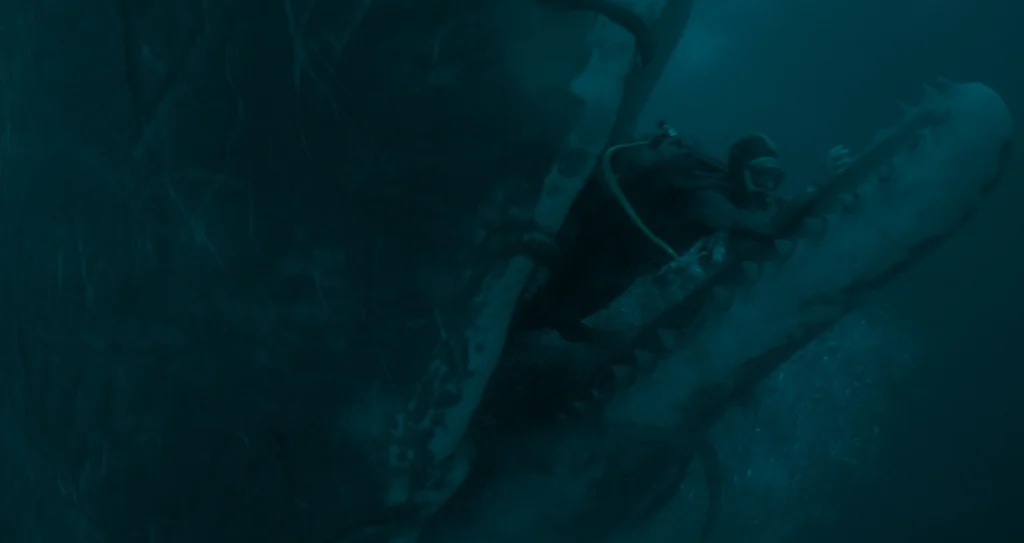
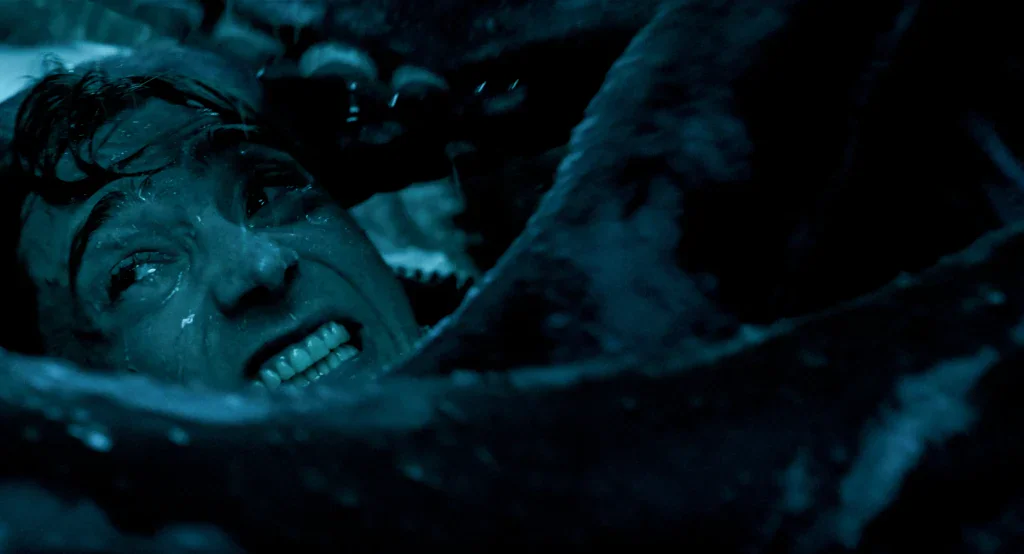
The film reaches whole new levels of survival instinct once we witness every sequence inside the belly of the whale itself. This is where the cramped claustrophobia of it all will push many beyond their physical limits. The way it’s captured on camera is so uniquely cramped in its showcase of whale anatomy where some shots within stomach contractions are shot in a way that feels like even the frame is running low on air to breathe.
The effects and bodily autonomy of the whale’s inside is such a great marriage of the strengths of digital VFX and tactile production design; there’s never a moment within this outlandish premise where you doubt the anxiety-driven reality of this situation, offering a well-realized vision of what is a highly unlikely scenario. Of course, any good survival flick comes with a fair amount of engaging problem/puzzle solving, which is also delivered on here. Jay can get insanely scrappy with the amount of resources he has within the diving gear he has at his disposal, and the film is great at planting seeds for things he’ll use to his aid later without them leaning on becoming an extremely obvious hint of what’s to come. All of this is accomplished while he still endures other sea creature-based challenges within the stomach, like a battle with an also-swallowed squid (and its beak) and a cute little jellyfish he uses for light and assistance during his journey.
Specific elements of the overbearing daddy trauma throughout the narrative are where Whalefall will definitely start to test at least some viewers. The majority of Whalefall follows Jay in the sperm whale, but the narrative structure after the film’s opening minutes is interspersed between the titular survival and flashbacks. You’re either watching Jay fighting through whale stomach acid or flashbacks to Jay’s awkward bond with his father, showing us pieces of why Jay was so hesitant to visit him while he was virtually on his deathbed or giving him occasional insight through previous conversations they had while training for diving that aided him in his situation.
Even with one flashback too many, it gets away with the predictability of the emotional core because Brolin and Abrams are able to sell it with the proper amount of sincere catharsis that just barely outweighs the sappiness at most moments. There is, however, a certain revelation when it comes to where exactly Mitt’s remains are where the film starts to become more silly in its emotional turmoil over a dad who has difficulties expressing his care, and it is where things start to become far too overbearing with the pathos, but it’s, luckily, never enough to sink the ship.
Abrams himself, following up his last “dude having the worst day of his life” performance in Resident Evil (2026) with another one here, is yet again great. He brings as much physicality as you’d want in this type of situation, but it’s nice to also see a performance that requires a lot more soft-spoken emotional interiority from him in this one-man show than the goofier sensibilities we’ve seen from him recently, and he sells it well even in the cheesiest of the film’s moments.
Nine times out of ten, you’d probably never be wondering what it’d look like to witness a human being hanging on for dear life within a whale’s throat, and in a delightful weird way, it’s a better world for the fact that we have films like Whalefall to provide answers to those percolating thoughts. Whalefall is as deeply suffocating and gross as it is overly sentimental in its emotions, and while it can start to dip into silly sappiness a lot more than one would like, the end result is still a deeply grueling story with a firm enough emotional center that will make even the most strong-willed wince through sheer intensity.
Whalefall is as deeply suffocating and gross as it is overly sentimental in its emotions, and while it can start to dip into silly sappiness a lot more than one would like, the end result is still a deeply grueling story with a firm enough emotional center that will make even the most strong-willed wince through sheer intensity.
-
GVN Rating

Lover of film writing about film. Member of the Dallas Fort-Worth Critics Association. The more time passes, the more the medium of movies has become deeply intertwined with who I am.