Every creator eventually hits the same wall. The idea in your head doesn’t match what’s on the screen. Maybe a character’s outfit needs a redesign, a background feels flat, or an entire scene needs a different mood, but starting from a blank canvas every single time is slow and exhausting. This is where Free image to image AI generator are changing the game for illustrators, game designers, writers, and content creators alike.
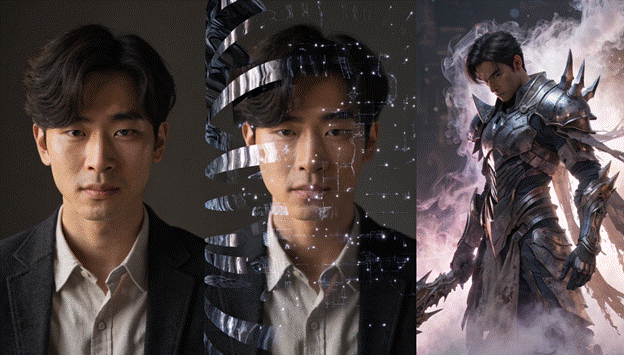
Instead of generating art from nothing, these tools let you start with an existing image and transform it, reshaping style, composition, lighting, or fine details while keeping the core idea intact. It’s less like painting from scratch and more like sculpting from a block of clay you’ve already roughed out. You already know the shape you want. You just need help refining it, and that shift in workflow is what makes image to image generation so valuable for creative professionals and hobbyists alike.
What Makes Image to Image Generation Different
Traditional text to image tools ask you to describe a scene from zero and hope the output matches your vision. Anyone who has typed a long, detailed prompt only to get something completely unrelated knows how frustrating that gap between imagination and output can be. Image to image generation flips that process entirely.
Instead of relying purely on words, you upload a reference. It could be a sketch, a photo, a previous AI render, or a piece of concept art. The AI then reinterprets that image based on your prompt, your chosen style, and how much change you want to introduce. This gives you far more control because you’re not starting from randomness. You’re starting from something you already like and asking the AI to build on it.
This matters enormously for creative consistency. If you’ve spent hours designing a character or a scene, you don’t want to reroll the dice on a completely new image every time you want a variation. Image to image tools let you:
- Preserve a character’s identity while changing their pose, outfit, or expression
- Shift an entire scene’s art style, moving from realistic to anime, painterly to cyberpunk, and everything in between
- Refine composition and lighting without redrawing from scratch
- Rapidly prototype different visual directions for the same concept
- Fix small details in an otherwise strong image without regenerating the whole thing
For creators working under deadlines, this kind of control is not just convenient. It’s the difference between finishing a project on time and getting stuck endlessly regenerating images and hoping for a lucky result.
Reimagining Characters Without Losing Their Soul
For writers, game developers, and comic artists, characters are the emotional core of a project. Readers and players connect with characters because they feel consistent and real, even across dozens of scenes, outfits, and moods. The challenge with AI generated art has always been consistency. Getting the same character to look right across an entire story, rather than looking like a slightly different person in every image, used to be one of the biggest frustrations with generative tools.
Image to image generators solve this problem by using an existing character portrait as an anchor point. You can feed the AI a base design and ask it to render that character in a new setting, wearing a different outfit, expressing a different emotion, standing in different lighting, or even rendered in an entirely different art style, while keeping recognizable traits like face shape, hair color, and overall silhouette intact.
This turns a single piece of concept art into an entire visual toolkit for storytelling. A game developer can generate the same protagonist across dozens of levels and cutscenes. A novelist working on a visual pitch deck can show their main character in multiple emotional states without commissioning a full illustration series. A comic artist can maintain visual continuity across chapters without redrawing every panel from scratch.
Building Visual Worlds, Not Just Single Images
Beyond characters, image to image tools are equally powerful for world building. A single environment sketch, whether it’s a fantasy castle, a futuristic city street, or a cozy village, can be reimagined in countless ways. A single base image can become:
- A daytime version and a nighttime version of the same location
- Different weather conditions or seasons applied to the same scene
- Multiple art styles for mood boards or client pitches
- Zoomed in details or wider establishing shots of the same environment
- Alternate color palettes to test different emotional tones
This is especially valuable for game studios, animators, and marketing teams that need a cohesive visual world spread across dozens or even hundreds of assets. Rather than briefing an artist from scratch for every single variation, teams can generate a strong first draft using image to image tools and then iterate much faster, saving time without sacrificing visual quality or consistency.
Practical Ways Creators Are Using These Tools
Across creative industries, people are finding new and unexpected uses for image to image generation. Some of the most common applications include:
Concept artists use image to image generation to explore multiple style directions quickly before committing hours of work to a final design. Instead of manually painting five different versions of an idea, they can generate variations in minutes and pick the strongest direction.
Indie game developers generate consistent character sprites and environment variants without needing a full art team on staff. This lowers the barrier to entry for solo developers and small studios trying to compete visually with larger productions.
Content creators repurpose a single visual asset into dozens of platform specific variations, adjusting aspect ratios, styles, and moods for different social platforms without starting from scratch each time.
Authors and worldbuilders turn rough sketches or vague mood references into polished visuals for pitch decks, book covers, or crowdfunding campaigns, giving their projects a professional look even without a design background.
Marketers adapt a single product photo into multiple styled versions for different campaigns, seasons, or audience segments, cutting down on the cost and time of traditional photo shoots.
Getting Started
The best way to understand the value of image to image generation is to try it on something you’re already working on. Pull up a character sketch, a scene you’ve been wanting to restyle, or a photo you’d like to transform, and see what the process feels like firsthand.
A Free Image to Image AI Generator like Ezeditor AI makes this accessible without requiring design software expertise or a steep learning curve, so you can go from a rough idea to a polished visual in minutes rather than hours. There’s no need to master complex editing software or wait days for a commissioned piece when you want to test a new direction for your character or world.
Final Thoughts
Image to image AI generators aren’t replacing creative vision, they’re extending it. They give creators a faster path from having an idea to having something they can actually show people, while keeping the parts of a design that matter most fully intact. Whether you’re reimagining a character for a new chapter, testing art styles for a game, building out a consistent visual world, or simply exploring what your existing artwork could become, these tools are quickly becoming a core part of the modern creative workflow. As the technology continues to improve, the gap between imagination and finished visual will only keep shrinking, giving creators more room to focus on the ideas that matter most.
Amanda Lancaster is a PR manager who works with 1resumewritingservice. She is also known as a content creator. Amanda has been providing resume writing services since 2014.