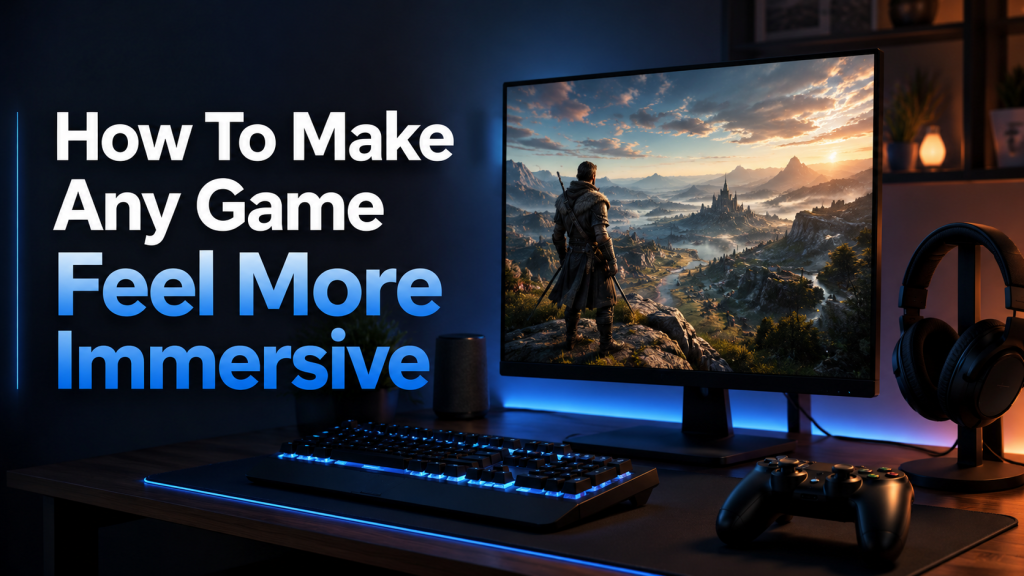
Whether you play on a high-end PC or a mobile device, the moments that stay with you usually come from feeling connected to what happens on screen. Graphics help, but they don’t carry the experience alone.
Small adjustments to sound, visuals, personal settings and game design can draw you deeper into the action and help you stay focused on the experience rather than the technology behind it.
Enhance audio and sensory feedback
Sound often shapes your connection to a virtual world more than visuals. Footsteps echoing through a corridor, distant environmental effects or music that changes during tense moments all help you understand what is happening around you without needing extra on-screen information.
Use headphones or a speaker setup that produces clear directional audio. Hearing where activity comes from means you react more naturally and spend less time checking maps or interface elements.
In competitive games, this can help you identify nearby threats, while in story-driven experiences it strengthens atmosphere and emotional impact. Even simple vibration feedback from a controller can reinforce actions by giving physical responses to key events.
Optimise visual performance and display settings
A stable, responsive image helps you stay engaged because your attention remains on the gameplay rather than technical distractions. Frequent stuttering, screen tearing or input delay can interrupt concentration and make actions feel disconnected from your commands.
Check your display settings and prioritise smooth performance over unnecessary visual effects. For example, reducing a few demanding graphics options may allow a higher and more consistent frame rate.
On a monitor with a high refresh rate, movement appears more fluid and aiming feels more responsive. The result is a playing experience that feels natural rather than strained.
Introduce personalisation and adaptive gameplay
Games feel more engaging when they respond to your preferences and behaviour. Many modern systems adjust difficulty, recommend content or alter challenges based on how you play.
Take advantage of available customisation options. You might adjust control layouts, modify interface elements or select accessibility features that suit your habits. Adaptive systems can also improve enjoyment by keeping challenges appropriate to your skill level.
The same principle appears across many forms of digital entertainment, including a bingo site that tailor’s recommendations and features to individual users, helping create a more relevant experience.
Prioritise simple, intuitive game design
Complex systems don’t automatically create stronger engagement. Clear controls and understandable mechanics often encourage deeper involvement because you spend less energy remembering commands and more energy making decisions.
Learn the core mechanics before exploring advanced features. When actions produce predictable results, you develop confidence and build familiarity with the game world. Retro-inspired releases often demonstrate this well, using straightforward systems that let players focus on exploration, strategy or competition instead of navigating complicated menus. As a result, the experience feels more immediate and rewarding from the very beginning.
Immersion grows when technology, design and player preferences work together. By considering the above, you can create a stronger connection to almost any game and enjoy a more engaging experience every time you play.

Heather Neves is working as a freelance content writer. She likes blogging on topics related to parenting, golf, and fitness, gaming . She graduated with honors from Columbia University with a dual degree in Accountancy and Creative Writing.