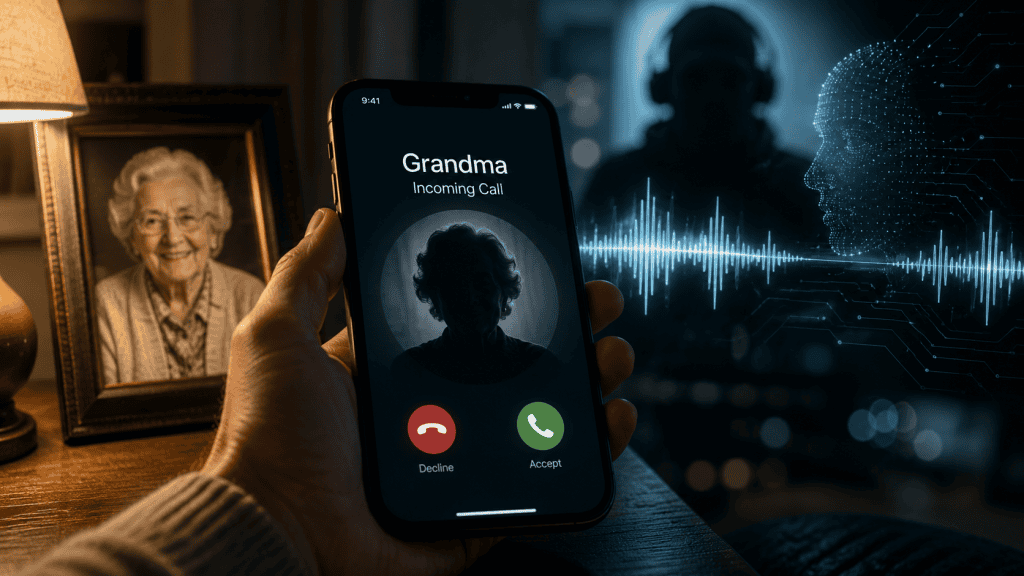
A woman in Arizona picks up her cell phone and hears her granddaughter sobbing on the other end, begging for help, saying someone has her. The voice sounds exactly right, down to the cadence and the panic.
It isn’t her granddaughter. It’s a few seconds of TikTok audio, run through a voice cloning tool and weaponized into a shakedown call. This isn’t a plot beat from a near-future thriller. It’s a normal afternoon.
The robocall you grew up rolling your eyes at, the one hawking extended car warranties in a stiff synthetic voice, has evolved. It sounds like people you love now. And the rules governing what callers can and can’t do with your phone number are scrambling to keep up.
Wait, How Bad Is the Robocall Problem Actually?
The robocall problem is bad enough that the numbers stop feeling like numbers and start feeling like weather reports. Unwanted telemarketing and scam calls jumped sharply and now make up the majority of that traffic.
That’s the volume story. The texture story is worse. The garbage calls are getting smarter, more targeted, and harder to tell from the real thing. Your phone has become a battlefield, and the enemy just got upgraded weapons.
Why Do the Scam Calls Suddenly Sound Human?
Because they are, in a sense. Generative voice models can spin up a passable clone of a specific person from a short audio sample: a podcast clip, an Instagram reel, a voicemail greeting, a wedding video somebody posted six years ago.
The tech is cheap, fast, and already out there. Two kinds of AI call show up most often in the wild:
- Impersonation scams. A cloned voice of a relative, a boss, or a public figure calls asking for money, gift cards, or a wire transfer, usually inside a manufactured emergency. Urgency is the whole trick. If you don’t have five seconds to think, you don’t notice the tell.
- Synthetic telemarketers. Instead of a scratchy pre-recorded pitch, you get a warm, natural voice that laughs at your jokes and answers follow-up questions. It’s still a bot. It just doesn’t sound like one anymore.
- Political and disinfo calls. Cloned voices of candidates or officials telling voters to stay home, show up on the wrong day, or trust bad information. The New Hampshire primary already saw a version of this.
Isn’t That Already Illegal…
Yes, and this is the part most people miss. In February 2024, the FCC declared that AI-generated voices count as “artificial” under the Telephone Consumer Protection Act. That means an AI voice calling your cell phone without your prior express consent is treated the same as an old-school robocall: unlawful, with statutory penalties per call.
The catch is enforcement. A ruling doesn’t stop the call from happening. It gives you, and state attorneys general, a legal hook once it does.
The dial tone is still the Wild West. The paperwork afterward is where the sheriff shows up.
What Can You Actually Do When One Lands on Your Phone
A few things, in this order:
- Don’t engage. Don’t press buttons to “opt out.” Don’t argue with the bot. Don’t say “yes” to open-ended questions. Any interaction confirms your number is live and moves you up the list.
- Hang up and call back on a known number. If “your kid” or “your bank” is on the line asking for money, end the call and dial the real number you have saved. A cloned voice cannot answer the phone you dial out on.
- Screenshot and save everything. Timestamp, caller ID, any voicemail audio, any follow-up text. These are the receipts that turn a bad afternoon into a case.
- Report the call. The FCC and FTC both take complaints. Your carrier probably has a spam-reporting shortcode too. None of this is glamorous, but it’s how the pattern gets built.
- Talk to a lawyer if the calls keep coming. If a company is repeatedly calling or texting you without consent, that isn’t annoying. It’s potentially a payday. Consumer protection attorneys who focus on the TCPA can pursue statutory damages on a per-call basis, and consultations are usually free.
Does Any of This Deterrence Stuff Work
Carrier-level call authentication, blocklist enforcement, and takedowns of shady voice providers have chipped away at the easiest scams. Private TCPA lawsuits are a real cost center for companies that treat consent as optional. And the AI ruling gave state AGs something sharper to swing.
None of it is a force field. The economics still favor the caller. Spinning up a new number, a new shell company, and a new voice model costs almost nothing. So the honest answer is layered: use the tools, protect the people around you who are most likely to fall for a panicked voice, and know your rights when something crosses the line.
The Uncanny Valley Is Calling
For years the geek internet argued about when AI voices would get good enough to fool a person. That debate is over. They’re good enough. What’s left is figuring out how to live in a world where a familiar voice on the phone is no longer proof of anything by itself.
Treat unexpected urgency as the red flag. Build a code word with the people you’d wire money for. Assume any voice can be faked, and let the burden of proof sit on the caller, not on you.
It’s a strange habit to build. It’s also, right now, the sanest one.

Caroline is doing her graduation in IT from the University of South California but keens to work as a freelance blogger. She loves to write on the latest information about IoT, technology, and business. She has innovative ideas and shares her experience with her readers.