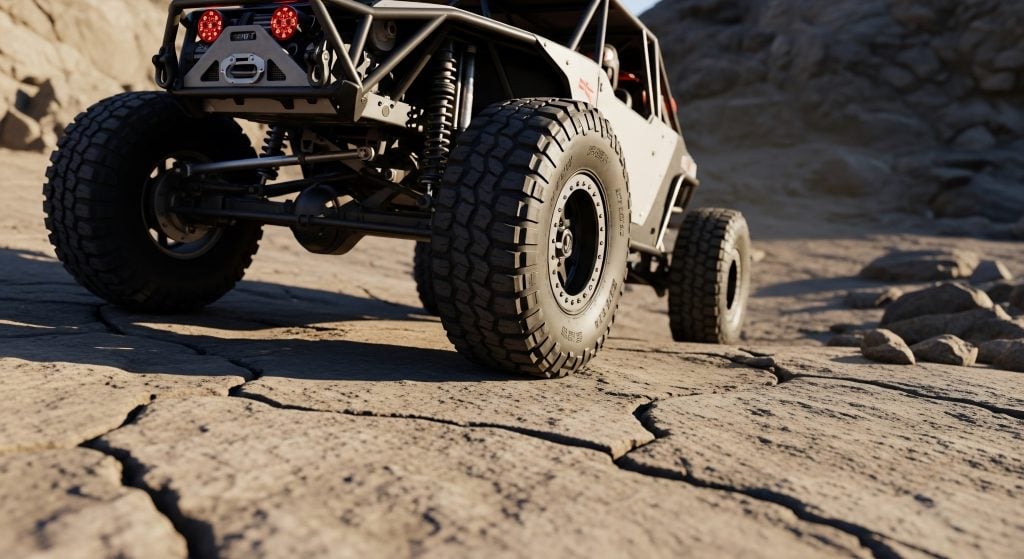
Off-road vehicles have evolved far beyond their traditional image of rugged machines built only for rough terrain. Today, they are highly advanced systems combining mechanical strength with intelligent software, sensors, and adaptive electronics. These innovations allow drivers to explore challenging environments with more confidence, control, and safety than ever before. For many enthusiasts researching modern adventure SUVs such as the Ford Bronco for sale Houston, understanding the technology behind these vehicles reveals just how much engineering has transformed off-road driving into a smart, assisted experience.
The Shift From Mechanical to Intelligent Off-Roading
In the past, off-roading relied heavily on driver skill, mechanical strength, and manual control of features like locking differentials and low-range gearing. While those fundamentals still matter, modern systems now integrate digital intelligence to assist the driver in real time.
Smart off-road vehicles use a combination of sensors, onboard computers, and automated systems to analyze terrain conditions instantly. This allows the vehicle to adjust traction, suspension, throttle response, and braking automatically. The result is a driving experience that reduces guesswork while improving performance across sand, mud, rocks, and snow.
Terrain Management Systems and Drive Modes
One of the most important innovations in modern off-road vehicles is the terrain management system. These systems allow drivers to select specific modes designed for different environments such as sand, mud, gravel, or rocky trails.
When a mode is selected, the vehicle automatically adjusts multiple parameters:
- Throttle sensitivity is fine-tuned for better control
- Traction control is recalibrated for slip conditions
- Transmission shift points are optimized
- Stability systems are adjusted for terrain behavior
For example, systems like Ford’s G.O.A.T. (Goes Over Any Terrain) modes are designed to simplify complex driving conditions by automatically configuring the vehicle for optimal performance in specific environments.
This technology removes much of the complexity once required for off-road driving, making it more accessible while still maintaining capability.
Advanced All-Wheel Drive and 4×4 Systems
Modern off-road vehicles rely heavily on intelligent all-wheel drive (AWD) and four-wheel drive (4WD) systems. Unlike older mechanical setups that required manual engagement, today’s systems use sensors to detect wheel slip and automatically distribute torque where it is needed most.
There are several types of systems:
- On-demand AWD that activates when slip is detected
- Full-time 4WD systems that continuously balance power
- Selectable 4WD systems with low-range gearing for extreme terrain
These systems are managed by onboard software that constantly evaluates traction and adjusts power distribution. Brake-based traction control can also redirect torque by slowing individual wheels, improving grip without driver input.
Suspension Technology and Adaptive Ride Control
Suspension systems in smart off-road vehicles have also become far more advanced. Instead of fixed mechanical setups, many modern vehicles feature adaptive or electronically controlled suspension systems.
These systems can:
- Raise or lower ride height depending on terrain
- Adjust damping stiffness for comfort or control
- Automatically respond to sudden terrain changes
For example, off-road tuned suspensions often include lifted ride height and reinforced components to improve clearance and durability on rough trails.
This allows vehicles to absorb impacts more effectively while maintaining stability on uneven surfaces.
Camera Systems and 360-Degree Visibility
Visibility is one of the biggest challenges in off-road driving. Modern vehicles address this with advanced camera systems that provide a full view of the surroundings.
These systems include:
- Front-facing trail cameras to view obstacles ahead
- Rear and side cameras for tight maneuvering
- 360-degree surround views for complete spatial awareness
Some vehicles also use “invisible hood” technology, which overlays camera footage so drivers can see terrain directly beneath the front of the vehicle. This is especially useful when climbing rocks or navigating narrow trails.
These tools significantly reduce blind spots and help prevent damage while improving driver confidence.
Hill Descent Control and Off-Road Safety Features
Steep descents are among the most challenging parts of off-road driving. Hill descent control systems automatically manage braking and speed on downhill slopes.
Instead of relying on manual braking, the system:
- Maintains a steady controlled speed
- Applies braking force to individual wheels if needed
- Allows the driver to focus on steering
Other safety features include:
- Roll stability control
- Off-road traction control
- Terrain-based braking adjustments
These systems work together to maintain stability and reduce the risk of loss of control on steep or uneven terrain.
Smart Traction Control and Torque Distribution
Traction control is one of the most critical technologies in off-road performance. Modern systems continuously monitor wheel speed and surface grip.
When slippage is detected, the system:
- Reduces engine power if necessary
- Applies brake force to spinning wheels
- Redirects torque to wheels with traction
This intelligent redistribution of power ensures that the vehicle maintains forward movement even in low-grip conditions like mud or sand.
It also reduces driver workload, allowing the system to handle complex traction decisions automatically.
Sensor Fusion and Terrain Analysis Systems
One of the most advanced developments in off-road technology is sensor fusion. This involves combining data from multiple sources such as cameras, accelerometers, wheel sensors, and gyroscopes.
The system uses this data to:
- Predict terrain roughness
- Adjust speed dynamically
- Optimize suspension response
- Improve stability in real time
Research in off-road navigation shows that integrating visual and motion data allows vehicles to anticipate terrain changes more effectively and respond proactively rather than reactively.
This predictive capability is a major step toward smarter and safer off-road driving.
Navigation and Off-Road Mapping Technology
Modern off-road vehicles also include advanced navigation systems designed specifically for trails and remote environments.
These systems offer:
- Satellite-based mapping for remote areas
- Trail tracking and route recording
- Elevation and terrain difficulty data
- Offline navigation capabilities
Some systems even allow drivers to share routes or access community-generated trail maps, improving exploration planning and safety.
Connectivity and Over-the-Air Updates
Connectivity plays an increasingly important role in off-road vehicles. Many modern systems allow for over-the-air software updates that improve performance, add features, or fix issues without requiring dealership visits.
Drivers can also connect vehicles to mobile apps to:
- Track vehicle location
- Monitor off-road performance data
- Check diagnostics remotely
- Plan routes in advance
This integration turns the vehicle into a connected digital platform rather than just a mechanical machine.
Conclusion
Smart off-road vehicles represent a major evolution in automotive engineering. Through technologies like terrain management systems, adaptive suspension, intelligent traction control, and advanced sensor networks, modern SUVs and trucks deliver a level of capability that was once impossible.
These innovations not only enhance performance but also improve safety and accessibility, allowing more drivers to confidently explore challenging environments. As technology continues to advance, off-road vehicles will become even more intelligent, predictive, and capable—blending rugged strength with digital intelligence to redefine adventure driving.

Hi! I’m Bryan, and I’m a passionate & expert writer with more than five years of experience. I have written about various topics such as product descriptions, travel, cryptocurrencies, and online gaming in my writing journey.