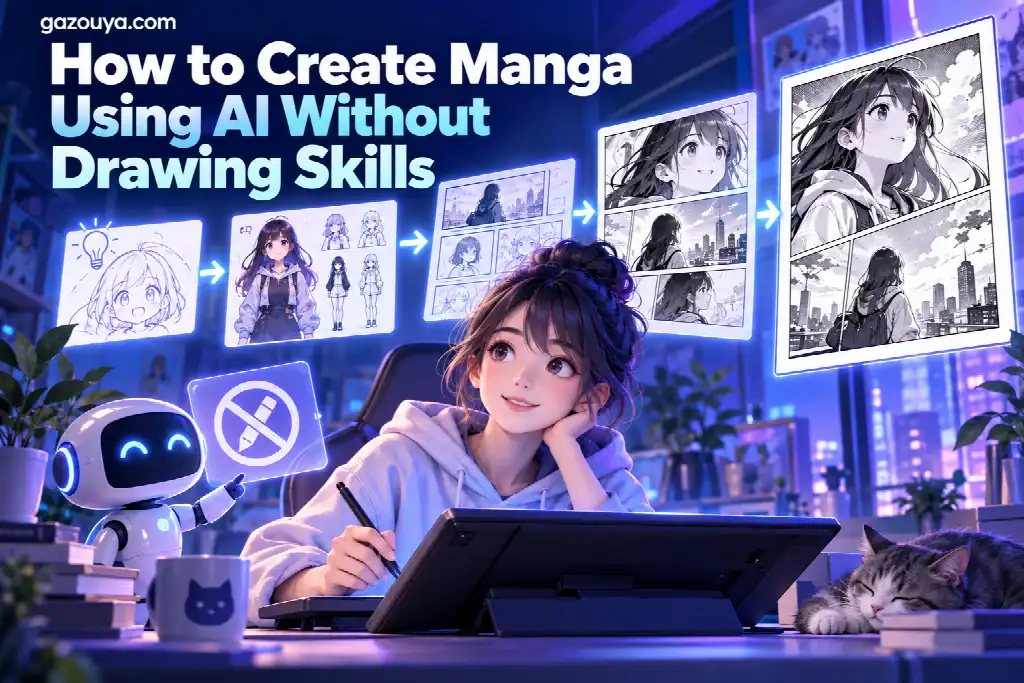
You have a story to tell but your drawing skills are not where you want them to be. You might think you need to hire an artist or spend years practicing your sketches. That is not the case anymore. You can use modern tools to build your own manga from scratch. This guide shows you how to go from a blank page to a finished comic without picking up a pencil.
Many people use tools specifically designed for AI漫画生成 to get the look they want. These platforms handle the heavy lifting of rendering characters and backgrounds. You just need to provide the creative direction. You’ll find that the process is more about your imagination than your ability to draw a straight line.
Step 1: Write Your Script and Storyboard
Every great manga starts with a solid story. You need to know what happens in each chapter before you start generating images. Write down your dialogue and describe the action in each panel. This helps you stay organized and ensures your story makes sense to the reader.
Break your script into pages and then into individual panels. A typical manga page has between three and seven panels. If you put too much on one page, it becomes hard to read. Think about the pacing of your story. Use large panels for important moments and smaller ones for quick dialogue.
Step 2: Design Your Characters
Consistency is the biggest challenge when you make manga with AI. You need your protagonist to look the same in every panel. Start by creating a character sheet. This is a single image that shows your character from different angles like the front, side, and back.
Use specific descriptions for your character. Instead of saying “a boy with messy hair”, try “a teenage boy with spiky black hair, wearing a red hoodie and a silver necklace”. The more detail you provide, the easier it is for the AI to replicate the look. Save the prompts you use so you can refer back to them later.
Step 3: Generate Your Manga Panels
Now you can start creating the actual art. You’ll use your character descriptions and combine them with scene descriptions. For a manga style, you should include keywords like “monochrome”, “screentone”, and “line art” in your prompts. This tells the AI to avoid colorful 3D renders and stick to the classic comic look.
If a panel does not look right the first time, do not worry. You can adjust your prompt or try a different seed number. Sometimes you might need to generate several versions of the same scene to get the perfect shot. Focus on the composition and make sure the characters are doing what the script requires.
Step 4: Arrange Layouts and Add Text
Once you have your images, you need to put them together. You can use standard image editing software or specialized comic creation tools. Place your generated panels onto a digital canvas. Leave space between the panels, which is called the gutter, to help the reader’s eye move across the page.
Adding speech bubbles and text is the final step of the visual process. Choose a font that is easy to read. Manga often uses specific fonts for different emotions. For example, you might use a bold, jagged font for shouting and a soft, rounded font for whispering. Make sure the bubbles do not cover up important parts of the artwork.
Step 5: Refine and Edit
Look over your finished pages to see if everything flows well. You might notice that a character’s hair color changed slightly or a background looks out of place. You can use inpainting tools to fix these small errors without regenerating the whole image. This step ensures your manga looks professional and polished.
Check your dialogue for spelling mistakes. Read the story out loud to see if the pacing feels right. If a scene feels too slow, you might remove a panel. If it feels too fast, you might add a close-up shot of a character’s reaction. This editing phase is where your project really comes together.
|
Step |
Action |
Expected Result |
|
1 |
Scripting |
A clear plan for every page |
|
2 |
Character Design |
A visual reference for consistency |
|
3 |
Image Generation |
Raw artwork for your panels |
|
4 |
Layout |
A structured comic page |
|
5 |
Lettering |
Dialogue and sound effects |
Tips and Best Practices
Use negative prompts to improve your results. Negative prompts tell the AI what you do not want to see. Common negative prompts for manga include “color”, “low quality”, “extra fingers”, and “blurry”. This helps keep your art clean and professional.
Keep your prompts simple and direct. AI works best when you use strong verbs and clear nouns. Instead of using long, complex sentences, use commas to separate your ideas. For example, “man sitting at a desk, drinking coffee, rainy window, manga style” works better than a long paragraph.
Pay attention to the lighting in your scenes. Even in black and white manga, lighting creates mood. You can add words like “dramatic shadows” or “bright sunlight” to your prompts. This adds depth to your panels and makes the world feel more real to the reader.
Save every prompt and seed number you use. If you find a style that you really like, you will want to use it again for future chapters. Creating a library of your successful prompts will save you a lot of time as your project grows.
Common Mistakes to Avoid
One common mistake is trying to put too much detail into a single prompt. If you ask for five characters, a complex background, and specific weather all at once, the AI might get confused. It is often better to generate the characters and background separately and then combine them.
Another mistake is ignoring the reading direction. Manga is traditionally read from right to left. If you are making a manga for a global audience, decide on your reading direction early and stick to it. Make sure your panel flow and speech bubbles guide the reader in the correct order.
Do not forget about the backgrounds. Some creators focus so much on the characters that the backgrounds look empty. A good background tells the reader where the story is happening. Use prompts that describe the setting, like “busy Tokyo street” or “quiet classroom”, to give your story more context.
Avoid using too many different styles in one book. If one page looks like a classic 90s manga and the next looks like a modern digital comic, it will distract the reader. Pick one style and try to maintain it throughout the entire project.
Conclusion
Creating your own manga is now possible for everyone. You do not need to spend years in art school to bring your stories to life. By using AI tools, you can focus on your storytelling and world building. The process requires patience and practice, but the results can be truly impressive.
Start with a short story to get used to the tools. As you become more comfortable with prompting and layout, you can move on to longer series. The most important thing is to start creating and sharing your ideas with the world. You have the power to be a manga creator today.

Amanda Lancaster is a PR manager who works with 1resumewritingservice. She is also known as a content creator. Amanda has been providing resume writing services since 2014.