TL;DR: Buying a video game does not necessarily mean owning the game itself. Digital purchases generally give players a license to access and use a game through a platform account, while physical buyers own the disc or cartridge but still play the software under a license. Physical copies usually provide greater flexibility for resale, lending, collecting and long-term preservation, but modern discs may still depend on downloads, patches or online servers. As the gaming industry moves further toward digital distribution, the difference between owning a product and owning access to it is becoming increasingly important.
For decades, buying a video game was simple. You walked into a store, picked a game off the shelf, brought it home and put the disc or cartridge into your console. That copy could sit in your collection for years, be lent to a friend, traded in or eventually sold.
The modern gaming industry works very differently.
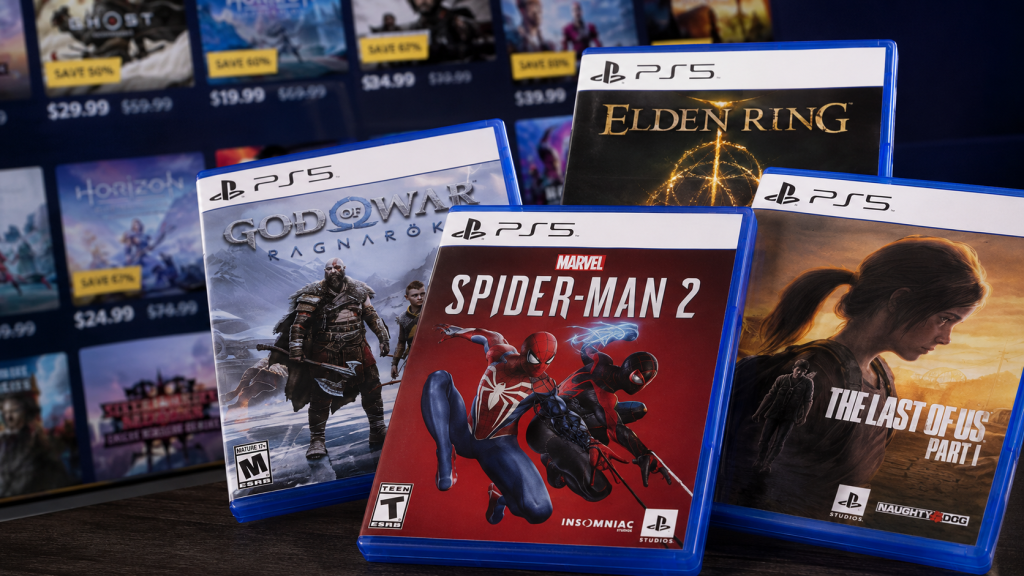
Digital storefronts, subscription services and consoles without disc drives have made downloading games increasingly normal. Sony Interactive Entertainment has taken that transition even further, announcing that physical disc production for new PlayStation games will end beginning in January 2028. Games released before that deadline will not be affected, but new releases after the transition are expected to be distributed digitally.
At almost the exact opposite end of the conversation, Xbox recently introduced a disc-to-digital feature designed to let players convert supported Xbox One and Xbox Series X discs into digital entitlements, potentially carrying physical libraries forward into an increasingly digital ecosystem.
Both developments raise the same larger question:
When you spend $70 on a video game, what do you actually own?
Do You Actually Own a Digital Video Game?
Not in the same way most people traditionally think about ownership.
When you purchase a digital game through services such as the PlayStation Store, Xbox Store, Nintendo eShop or Steam, you are generally purchasing a license to access and use the software.
The language used by the major platforms makes this distinction relatively clear. PlayStation’s software terms state that software is licensed rather than sold, while Steam similarly describes its games and services as licensed content that does not give the customer ownership of the software itself. Nintendo also describes much of its digital software as licensed rather than sold.
That doesn’t mean your digital game is likely to suddenly disappear tomorrow. Millions of players have maintained digital libraries for years without significant problems.
But there is an important distinction between owning an object and having permission to access software through an account.
With a digital purchase, your ability to use the game can depend on several things:
- Your platform account remaining accessible
- The platform continuing to support the hardware
- License authentication systems continuing to function
- The game remaining compatible with the hardware
- Required servers continuing to operate
- Necessary downloads remaining available
For most games, none of those concerns will matter during the normal lifespan of a console. They become much more important when someone wants to play that game 10, 20 or even 30 years later.
What Do You Own When You Buy a Physical Game?
A physical game provides a more tangible form of ownership, although there is an important technical distinction.
You own the physical disc or cartridge. You do not suddenly own the copyright, source code, characters or intellectual property contained on it.
The software itself is still generally governed by a license agreement.
The important difference is what owning that physical copy allows you to do in practice.
Depending on the platform and game, you can typically:
- Keep the disc indefinitely
- Sell it
- Trade it in
- Give it away
- Buy a used copy
- Move it between compatible consoles
- Lend it to someone
Those abilities give physical games something digital libraries rarely have: a functioning secondary market.
A PlayStation disc can change hands several times without Sony needing to create a new digital license for each player. A digital PlayStation purchase, by comparison, is normally attached to the purchaser’s account and cannot simply be sold to another person.
Physical vs Digital Games At a Glance
| Feature | Physical Games | Digital Games |
|---|---|---|
| Resell | Usually yes | Usually no |
| Trade in | Yes | No |
| Lend to a friend | Usually easy | Restricted by platform sharing systems |
| Requires physical storage | Yes | No |
| Can be lost or damaged | Yes | No physical copy to damage |
| Tied to an account | Usually less dependent | Yes |
| Can be delisted from a store | Used copies may remain available | New purchases may become impossible |
| Used game market | Yes | Generally no |
| Convenience | Requires changing discs | Instant library access |
| Long-term preservation | Potentially stronger | More dependent on platform infrastructure |
What Happens When a Digital Game Gets Delisted?
Delisting is one of the biggest sources of confusion surrounding digital games.
A game being removed from a digital storefront does not automatically mean everyone who purchased it loses access.
In many cases, delisting simply means new customers can no longer buy the game. Existing owners may still be able to download it from their purchase history.
But there is no universal rule.
Licensing agreements expire. Publishers close. Servers shut down. Platforms retire older hardware. Online authentication systems change.
All of these things can affect whether a game remains playable.
This is where physical media can offer an advantage. Even if a title disappears from an online store, existing discs do not disappear from people’s shelves.
A discontinued physical game may actually become more valuable as collectors and players search for copies that are no longer commercially available.
Store Shutdowns Show Why Digital Ownership Matters
Digital storefronts are not permanent.
Nintendo stopped allowing new purchases through the Wii U and Nintendo 3DS eShops in 2023. Previously purchased games can still be redownloaded for the foreseeable future, but the stores no longer function as places to purchase new software.
PlayStation is undergoing a similar transition with older hardware. Sony has announced plans to close PlayStation Store purchasing on PS3 and PS Vita in most remaining regions in July 2027.
These examples do not mean digital purchases instantly disappear when a store shuts down. In fact, companies frequently maintain download access for existing customers long after new purchases end.
What they demonstrate is something more important:
Every digital storefront eventually becomes legacy infrastructure.
A physical game does not require a storefront to remain listed for the physical copy itself to continue existing.
Can You Play Digital Games Without Internet?
Sometimes.
Digital does not automatically mean “always online.”
For example, PlayStation 5 allows players to designate a console for Console Sharing and Offline Play. Games that have already been purchased and downloaded can then be played offline on that system in supported circumstances.
Other platforms use similar license systems.
The problem appears when a console needs to authenticate ownership, when an account has moved between systems or when the game itself requires an internet connection.
A digital single-player game that works entirely offline can be almost as convenient years later as it was when purchased. An online-only game could become unusable once its servers disappear regardless of whether the player originally purchased it digitally or physically.
Physical Games Aren’t Always Completely Offline Either
This is where the physical-versus-digital argument becomes more complicated.
A disc sitting in a box does not automatically guarantee that the entire finished game exists on that disc.
Modern games frequently receive:
- Day-one patches
- Bug fixes
- Performance updates
- Additional languages
- Texture packs
- Online components
- Post-launch content
Some physical releases contain a perfectly playable version of the game without an internet connection. Others are significantly improved through updates. In more extreme cases, a physical product may require substantial additional data before it can function as intended.
That means the preservation value of a physical release can vary dramatically from game to game.
Why Does My Physical Game Still Install to the Console?
Another common misconception is that buying a physical game means the console runs everything directly from the disc.
That is generally no longer how modern consoles work.
On PlayStation 5, for example, disc-based games install game data onto the console’s storage. The disc then remains necessary when launching the game because it helps verify that the player still possesses the physical copy.
That is why buying physical does not necessarily save SSD space.
A 100GB game may consume roughly the same storage capacity whether the player’s license comes from a digital purchase or a disc.
The difference is largely how ownership or authorization is verified.
Can You Resell a Digital Game?
Usually not.
This may be the biggest practical difference between physical and digital ownership.
When you finish a physical game, you can potentially sell it and recover part of the purchase price. Someone else can then buy that used copy for less than the original retail price.
Digital storefronts generally don’t provide a comparable resale system.
If you buy a $70 digital game, play it for ten hours and decide you never want to touch it again after the applicable refund period has ended, that license normally remains attached to your account.
There is no GameStop trade-in counter for your digital library.
Physical gaming therefore creates an economy that digital gaming largely eliminates:
Publisher → Player → Used retailer or buyer → Another player.
Digital distribution typically stops after the first transaction.
What About Lending Games to Friends?
Physical media wins this category for simplicity.
Hand someone the disc.
That’s it.
Digital platforms increasingly offer family sharing, console sharing and other ways for multiple people to access games. Those features can be extremely useful, but they come with platform-specific rules and restrictions.
A physical copy doesn’t require the owner and borrower to understand account activations or primary-console settings. Whoever possesses the compatible disc can generally use it.
Xbox’s Disc-to-Digital System Could Blur the Line
One of the most interesting developments in this debate arrived in August 2026.
Xbox announced a new system allowing players to insert supported Xbox One or Xbox Series X discs and claim a corresponding digital entitlement. Microsoft says thousands of titles are expected to participate, with supported games potentially gaining access to features such as Xbox Play Anywhere and cloud gaming.
The company has described the program partly as an effort to preserve the game libraries players have accumulated over multiple generations.
It represents an intriguing middle ground.
Instead of forcing players to choose between physical ownership and digital convenience, future systems could potentially allow physical media to establish a digital entitlement that follows the player across new hardware.
Whether that becomes a wider industry standard remains to be seen, but it could become increasingly important if consoles continue moving away from built-in disc drives.
Digital-Only Consoles Are Changing the Decision
For some players, the choice between physical and digital has already been made by the hardware.
Consoles designed without optical drives have helped make digital gaming mainstream. A player using a digital-only console cannot simply purchase a bargain used disc, borrow a friend’s copy or pick up an older physical game.
The digital storefront becomes the primary marketplace.
That is incredibly convenient, but it also gives the platform holder considerably more control over where games are purchased.
Physical players can potentially compare:
- Amazon
- Best Buy
- GameStop
- Walmart
- Independent game stores
- Used marketplaces
- Private sellers
Digital console owners are much more dependent on the console’s supported storefronts and authorized sellers.
Physical Games Are Important for Game Preservation
This debate goes beyond whether someone prefers looking at game cases on a shelf.
Video game preservation is becoming one of the industry’s biggest long-term challenges.
Games can disappear because of:
- Expired music licenses
- Expired character or franchise licenses
- Publisher closures
- Store shutdowns
- Server shutdowns
- Hardware incompatibility
- Online authentication requirements
A physical disc containing a functional version of a game provides one additional way for that game to survive outside the storefront where it was originally sold.
It isn’t a perfect solution. Discs degrade. Consoles break. Updates can disappear. Online games can become useless without servers.
But distributing millions of physical copies places millions of independent copies of that software into the world.
A purely digital release is far more dependent on the companies maintaining access to it.
Are Digital Games Better Than Physical Games?
Digital gaming has enormous advantages, which explains why the industry continues moving in that direction.
There are no discs to lose or damage. You can purchase a game from home and begin downloading it immediately. Switching games takes seconds. Entire libraries can travel with an account, and digital sales frequently offer enormous discounts.
For many players, those benefits outweigh concerns about resale or preservation.
Physical games offer a different kind of value.
Collectors get something tangible. Budget-conscious players can buy used games and resell completed ones. Friends can easily exchange copies. Rare titles can survive long after publishers stop selling them.
Neither format is objectively better for every player.
The real difference is what you value.
Physical Games Are Best If You…
- Collect games
- Frequently buy used games
- Resell games after finishing them
- Like lending games to friends
- Want less dependence on one digital storefront
- Care about game preservation
- Shop around for retail discounts
Digital Games Are Best If You…
- Value convenience above everything else
- Frequently switch between games
- Don’t care about resale value
- Prefer having no physical collection
- Use remote or cloud gaming features
- Buy most games during digital sales
- Use a console without a disc drive
So, Do You Really Own Your Games?
The most accurate answer is: it depends on what you mean by “own.”
Buying a physical game generally means you own a particular physical copy. You can hold it, store it, give it away and usually sell that copy to another person. The copyrighted software contained on that disc is still used under a license.
Buying digitally is different. Your purchase generally grants a license connected to your account and governed by the platform’s terms.
For everyday gaming, the distinction might feel meaningless. Click the icon, the game launches and you play.
Over decades, however, the distinction becomes much more significant.
Sony’s decision to end physical production of new PlayStation games beginning in 2028 suggests the industry may be approaching a future where physical games become the exception rather than the standard. At the same time, Xbox’s effort to carry physical libraries forward demonstrates that companies know players care deeply about maintaining access to the games they have purchased.
The future of gaming may be digital.
The unresolved question is whether that future will give players the same sense of permanence that came from putting a game on a shelf and knowing it was theirs.
Frequently Asked Questions
Do I own a game I buy digitally?
You generally purchase a license allowing you to access and use the game rather than ownership of the software itself. The exact rights depend on the storefront’s terms and applicable law.
Can a digital game be removed from my library?
Games can be delisted from storefronts without necessarily being removed from existing customers’ libraries. However, long-term access can depend on platform policies, account status, servers, licensing and continued download support.
Can physical games be played without internet?
Many can, but not every physical release is completely independent of online services. Some games require updates, additional downloads, authentication or servers.
Do physical games take less storage space?
Not necessarily. Modern consoles typically install game data onto internal storage even when the game was purchased on disc.
Can I sell a digital video game?
Major console and PC storefronts generally do not provide a system that allows individual digital game licenses to be resold like physical copies.
Will physical video games disappear?
The industry is moving increasingly toward digital distribution, and Sony has announced plans to discontinue physical production for new PlayStation releases beginning in January 2028. Physical games nevertheless remain part of the market today, and other companies may take different approaches.

DC Fanboy! Superman is the greatest comic book character of all time. Favorite movies are Man of Steel, Goonies, Back To the Future