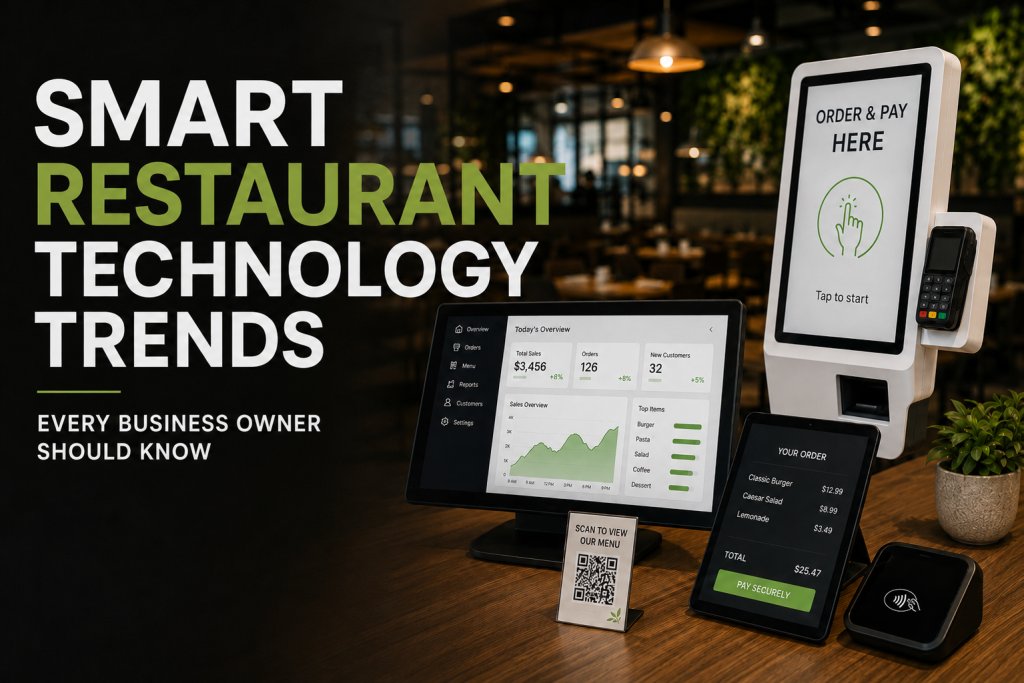
Technology is changing the restaurant industry faster than ever, influencing everything from how customers place orders to how kitchens manage inventory and how owners make business decisions. For restaurants looking to improve efficiency and deliver a better dining experience, adopting the right technology can make a significant difference. Businesses such as https://lemanskitchen.com/ can benefit from understanding these developments and identifying which solutions genuinely improve operations rather than simply following every new technology trend. In 2026, restaurant technology is increasingly focused on connected systems, artificial intelligence, automation, personalization, and smarter data use.
AI-Powered Restaurant Operations
Artificial intelligence has moved beyond being an experimental technology and is becoming a practical tool for restaurant operators. AI can analyze sales data, identify customer patterns, forecast demand, assist with ordering, and provide recommendations for improving operations.
For example, an AI-powered system can examine historical sales and predict which menu items are likely to be popular on a particular day. It can consider factors such as previous sales, seasonal trends, weather, holidays, and local events. This information can help managers prepare appropriate inventory and staffing levels.
AI is also being used for customer-facing services. Voice ordering systems, automated chat assistants, and AI-powered reservation tools can respond to routine questions and handle certain orders without requiring employees to answer every interaction manually. Industry reporting shows that restaurant operators are increasingly applying AI to areas such as marketing, predictive analytics, inventory management, voice ordering, and kitchen operations.
Cloud-Based POS Systems
The traditional point-of-sale system is evolving into a central operating platform for modern restaurants. Cloud-based POS technology allows restaurant owners to manage transactions, menus, customer information, sales data, and other operational details from connected devices.
One of the biggest advantages is accessibility. Owners and managers can review important information without necessarily being physically present at the restaurant. They can monitor sales, identify popular menu items, examine performance trends, and make faster decisions.
Modern POS systems can also connect with online ordering, payment processing, loyalty programs, inventory management, and kitchen display systems. This integration reduces the need to enter the same information into multiple systems and can help create a more consistent flow of information throughout the business. POS modernization remains one of the major technology investment areas for restaurant operators.
Digital Ordering and Direct Online Sales
Customers increasingly expect restaurants to offer convenient digital ordering options. A mobile-friendly website or restaurant ordering platform allows customers to browse menus, customize meals, select pickup or delivery, and pay digitally.
For restaurant owners, direct ordering can offer another important advantage: greater control over the customer relationship. Third-party delivery platforms can help restaurants reach new customers, but businesses may have less control over customer data and may also pay platform fees.
A strong digital ordering strategy does not necessarily mean abandoning delivery marketplaces. Instead, restaurants can use third-party platforms for customer acquisition while encouraging repeat customers to order directly through their own website or digital channels. This approach can help businesses build a more direct relationship with returning customers.
Self-Service Kiosks and Digital Menus
Self-service technology is becoming increasingly common, particularly in quick-service and fast-casual restaurants. Digital kiosks allow customers to browse menu items, customize orders, add extras, and complete payment without waiting for a cashier.
The technology can also create opportunities for smarter upselling. Instead of relying entirely on employees to recommend additional items, a digital interface can suggest complementary products based on the customer’s current order.
However, successful kiosk implementation requires more than installing a touchscreen. The interface needs to be simple, fast, accessible, and connected to the restaurant’s POS, loyalty, inventory, and kitchen systems. Recent industry research indicates that diners are increasingly comfortable using self-service kiosks, while confusing interfaces and disconnected loyalty systems can reduce satisfaction.
Kitchen Display Systems
Kitchen Display Systems, commonly called KDS, are replacing many paper-based kitchen tickets with digital order management. Instead of relying on handwritten tickets or employees repeatedly communicating orders, digital orders can move directly from the POS or ordering platform to the appropriate kitchen station.
A KDS can help kitchen teams organize orders by preparation time, priority, or station. This can reduce confusion during busy periods and provide staff with clearer information about what needs to be prepared.
The next stage of this technology involves connecting kitchen displays with inventory, ordering, and predictive systems. When these systems communicate with each other, restaurants can create a more connected workflow from customer order to kitchen preparation and final fulfillment.
Smart Inventory Management
Food waste and inaccurate inventory can significantly affect restaurant profitability. Smart inventory technology helps owners monitor stock levels, track ingredient usage, and identify purchasing patterns.
Connected inventory systems can update stock information as ingredients are used. More advanced platforms can also use historical data to predict future requirements. This can help restaurants avoid ordering excessive quantities while reducing the likelihood of running out of important ingredients.
AI-powered forecasting can make this process even more useful by considering demand patterns rather than relying only on fixed reorder points. For restaurant owners, better inventory visibility can translate into less waste, more controlled purchasing, and improved margins.
Digital Loyalty and Personalization
Customer loyalty programs are also becoming more sophisticated. Instead of simply rewarding customers with points, modern loyalty platforms can collect useful information about ordering habits and preferences.
Restaurants can use this information to create more relevant promotions. A customer who frequently orders a particular meal, for example, may receive a personalized recommendation or an offer related to that preference.
Personalization can also appear directly within digital ordering platforms, kiosks, mobile applications, and other customer-facing systems. The goal is to make technology feel more useful rather than intrusive. When connected properly, loyalty, ordering, and customer data can help restaurants provide more relevant experiences while encouraging repeat visits.
Contactless Payments and Digital Wallets
Fast and convenient payment options have become an important part of the modern dining experience. Contactless cards, mobile wallets, QR-based payments, and integrated digital payment systems can reduce friction at checkout.
For customers, faster payment means less time waiting at the end of a meal. For restaurants, integrated payments can help simplify transaction management and connect payment information with POS and customer records.
The key is flexibility. Restaurants should consider offering multiple secure payment methods so customers can choose the option that works best for them.
Data Analytics for Better Decisions
One of the most valuable restaurant technologies may be the least visible to customers: analytics.
Modern restaurants generate large amounts of information through POS transactions, online orders, loyalty programs, reservations, inventory systems, and marketing campaigns. Analytics platforms can turn this information into useful insights.
Owners can identify their best-selling dishes, busiest periods, underperforming menu items, average order values, repeat customer patterns, and promotional performance. Instead of relying entirely on intuition, managers can use real-time and historical information to make more informed decisions.
This is particularly important as restaurant technology becomes more connected. The goal is no longer simply collecting more data; it is connecting different systems so the information can actually support better decisions.
Automation in the Back of the House
Restaurant automation is also expanding beyond customer ordering. Automated and semi-automated equipment can assist with repetitive preparation, food handling, inventory processes, and other back-of-house tasks.
The most practical approach is not necessarily to replace employees with machines. Instead, restaurants can use automation to reduce repetitive work and allow employees to focus on food quality, hospitality, problem-solving, and tasks that require human judgment.
This distinction is important because technology should support restaurant employees rather than create unnecessary complexity. Current industry trends show increasing interest in kitchen automation as operators look for greater consistency and more efficient workflows.
Restaurant Cybersecurity Is Becoming More Important
As restaurants adopt cloud POS platforms, digital payments, customer databases, online ordering, and connected devices, cybersecurity becomes increasingly important.
Restaurant owners should carefully consider how customer and payment information is stored, who has access to business systems, and whether software providers follow appropriate security practices. Strong passwords, employee access controls, software updates, secure networks, and reliable backup procedures can all contribute to a safer technology environment.
Cybersecurity should be considered part of restaurant operations rather than an issue reserved for large corporations. Even smaller businesses can benefit from establishing basic security practices before expanding their digital systems.
Sustainability Through Technology
Technology can also support more sustainable restaurant operations. Smart inventory systems can help reduce food waste, while demand forecasting can prevent excessive purchasing. Digital receipts and menus can reduce paper consumption, and energy-monitoring technology can help businesses identify unnecessary electricity usage.
Sustainability therefore does not have to be treated solely as a marketing initiative. When technology helps a restaurant reduce waste and use resources more efficiently, it can support both environmental goals and financial performance.
Choosing the Right Restaurant Technology
With so many options available, restaurant owners should avoid adopting technology simply because it is considered trendy. The better approach is to identify the restaurant’s biggest operational problems first.
A business struggling with order accuracy may benefit more from a KDS and integrated POS than from an expensive AI system. A restaurant losing customers to slow ordering may benefit from a better online ordering platform or self-service kiosk. A business experiencing excessive food waste may gain more from inventory forecasting.
The most successful technology strategies focus on integration. A restaurant does not need dozens of disconnected applications. It needs systems that communicate with one another and make daily operations simpler.
The Future of Smart Restaurants
Restaurant technology is moving toward a more connected and intelligent future. AI, automation, digital ordering, cloud-based POS systems, analytics, loyalty platforms, and smart kitchen technology are increasingly becoming parts of one larger operational ecosystem.
For business owners, the biggest opportunity is not simply adopting the newest technology. It is using technology strategically to improve efficiency, control costs, understand customers, and deliver a better experience.
The restaurants that succeed with technology will likely be those that maintain the right balance between digital convenience and human hospitality. Technology can process orders, analyze data, predict demand, and automate repetitive tasks, but the quality of food, service, and customer relationships will remain central to the restaurant experience.
Ultimately, smart restaurant technology should make the business feel simpler, not more complicated. By choosing connected tools that solve real operational challenges, restaurant owners can build businesses that are more efficient, adaptable, and prepared for the future.

Amanda Lancaster is a PR manager who works with 1resumewritingservice. She is also known as a content creator. Amanda has been providing resume writing services since 2014.