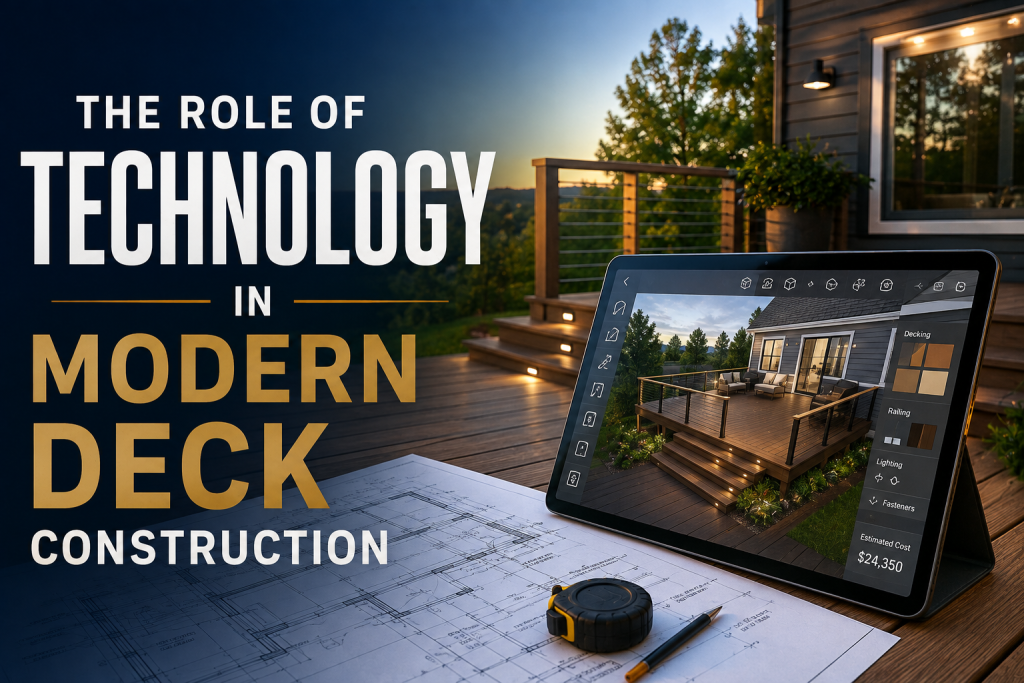
Technology has transformed deck construction from a largely manual process into a more precise, efficient, and visually driven form of outdoor building. Today, homeowners can explore designs digitally, compare materials, review realistic 3D concepts, and communicate project details more easily with professionals. For homeowners considering a new outdoor living space, working with experienced deck builders in Rock Hill, SC can provide the craftsmanship needed to turn a technology-assisted design into a durable finished deck. From planning and measurements to material selection and construction, modern technology is helping deck professionals improve accuracy while giving customers more control over the final result.
Digital Design and Visualization
One of the biggest changes technology has introduced to deck construction is the ability to visualize a project before construction begins. Traditional planning often depended on sketches, photographs, and verbal descriptions. While these methods can still be useful, digital design software provides a much clearer picture of what a completed deck may look like.
Modern design programs can create detailed layouts showing deck dimensions, stairs, railings, seating areas, and other features. Some tools can even produce three-dimensional renderings that allow homeowners to view a proposed deck from different angles. This makes it easier to identify design concerns before materials are purchased or construction starts.
Digital visualization can also improve communication between homeowners and contractors. Instead of trying to describe a preferred layout, a customer can review a digital model and request specific changes. This reduces misunderstandings and helps everyone involved develop a clearer understanding of the project.
More Accurate Measurements
Accuracy is essential in deck construction because even relatively small measurement errors can affect the entire structure. Technology is helping contractors improve the way they measure properties and plan construction areas.
Digital measuring devices, laser tools, satellite mapping, and other technologies can help professionals collect more precise information about a property. Depending on the project, contractors may also use digital site plans and aerial imagery to understand property boundaries, elevations, existing structures, and surrounding features.
More accurate measurements can reduce material waste and make the construction process more predictable. They can also help contractors identify potential challenges before work begins, which may prevent expensive changes later in the project.
3D Modeling for Better Planning
Three-dimensional modeling takes digital deck design a step further. Rather than viewing a project only as a flat drawing, contractors and homeowners can examine a virtual representation of the structure.
This technology can be especially useful for complicated decks with multiple levels, unusual layouts, integrated stairs, privacy features, or built-in seating. A 3D model can show how different components relate to one another and help identify possible construction problems during the planning stage.
For homeowners, 3D modeling also makes design decisions easier. They can compare railing styles, deck shapes, colors, and other features before making final selections. This can increase confidence and reduce the likelihood of changing preferences after construction has already started.
Material Selection Through Digital Tools
Technology has also made it easier to research and compare decking materials. Homeowners can investigate options such as pressure-treated wood, composite decking, PVC, and other modern materials using manufacturer websites, digital catalogs, product specifications, and online visualizers.
Digital tools can help customers compare factors such as appearance, maintenance requirements, durability, expected lifespan, and cost. Some manufacturers also provide visualization tools that show how particular decking colors and textures may appear in an outdoor environment.
This information does not replace professional advice, but it gives homeowners a stronger starting point for conversations with their contractor. A knowledgeable builder can then help determine which materials are appropriate for the property’s conditions, intended use, and budget.
Smart Project Management:
Construction management software is another important part of modern deck building. Contractors can use digital platforms to organize schedules, communicate with customers, track materials, manage documentation, and coordinate different stages of a project.
For homeowners, better project management can mean clearer expectations. Digital communication can make it easier to receive updates about construction progress, scheduling changes, material deliveries, and upcoming work. Instead of depending entirely on phone calls or paper records, important information can be organized in one accessible location.
For contractors, these tools can improve organization across multiple projects. Better scheduling can help teams coordinate labor and materials while reducing unnecessary delays.
Technology and Structural Precision:
Although craftsmanship remains essential, technology can support greater precision during construction. Digital plans and measurement tools allow builders to work from detailed specifications rather than relying solely on manual calculations.
Computer-assisted planning can help contractors determine dimensions, spacing, material quantities, and other project requirements. When used correctly, these tools can reduce calculation errors and support consistent construction practices.
Technology should not be viewed as a replacement for experience. Experienced builders still need to understand structural requirements, local conditions, appropriate materials, drainage, load considerations, and construction techniques. Instead, technology gives professionals additional tools for applying that knowledge more accurately.
Improved Safety During Construction:
Safety is another area where technology can contribute to better deck construction. Digital plans can help crews understand project details before beginning physical work, while modern measuring and layout tools can reduce avoidable errors.
Some construction businesses also use digital safety documentation, equipment tracking, training platforms, and project management systems to organize safety procedures. Keeping documentation accessible can help teams follow established processes and maintain better communication on the job site.
Technology does not eliminate construction risks, but it can help professionals identify issues earlier and maintain a more organized work environment.
Drones and Aerial Property Assessment:
Drones have become useful tools across many areas of construction, including outdoor building projects. Aerial imagery can provide contractors with a broader view of a property than traditional ground-level photographs.
For certain projects, drone imagery can help professionals assess the surrounding landscape, existing structures, rooflines, access points, and other site characteristics. It can also provide useful visual documentation before, during, and after construction.
However, drone use should always follow applicable regulations and property privacy requirements. The technology is most valuable when it provides practical information that improves planning rather than being used simply because it is available.
Mobile Technology on the Job Site:
Smartphones and tablets have become everyday tools for construction professionals. Builders can access digital plans, take measurements, document progress, communicate with customers, review product information, and record project details without returning to an office.
Mobile access can make construction workflows more flexible. If a question arises during installation, a contractor may be able to access the relevant plan or specification immediately. Progress photographs can also be shared with homeowners, providing greater transparency throughout the project.
Sustainable Deck Construction:
Technology is also supporting more sustainable approaches to deck construction. Better design software and measurement tools can help contractors estimate material requirements more accurately, reducing unnecessary waste.
Digital planning may also make it easier to compare materials based on durability and maintenance requirements. Choosing a longer-lasting material can sometimes reduce the need for frequent replacement, which may lower the overall environmental impact of the project.
In addition, digital documentation reduces dependence on printed plans, invoices, and other paperwork. While these changes may seem small individually, they can contribute to more efficient construction practices when adopted across many projects.
Smart Features for Modern Outdoor Living:
Technology does not stop once a deck has been built. Homeowners can incorporate smart features into outdoor living spaces to make them more comfortable and functional.
Depending on the design, a deck may include integrated lighting, smart outdoor speakers, automated lighting controls, weather-resistant entertainment systems, or connections to broader home automation platforms. These features can turn a basic deck into a more versatile outdoor living environment.
The key is planning these features early. Wiring, electrical requirements, mounting locations, and weather protection may need to be considered before construction is completed. Integrating technology during the design stage can produce a cleaner and more practical result than attempting major additions afterward.
Technology Improves Customer Communication:
Communication is one of the simplest but most valuable benefits of modern construction technology. Email, messaging platforms, video calls, digital proposals, shared documents, and project management applications allow contractors and homeowners to stay connected throughout a project.
Customers can ask questions, approve design changes, review selections, and receive progress updates without always needing an in-person meeting. This can make the entire experience more convenient, especially for homeowners with busy schedules.
Clear digital communication can also create a useful record of decisions. When design specifications and approvals are documented, everyone has a clearer reference point throughout construction.
The Human Side Still Matters:
Despite the growing role of technology, successful deck construction still depends heavily on human expertise. Software can create a design, but an experienced professional must determine whether that design is practical for the property. Digital measurements can provide information, but a skilled builder must know how to interpret site conditions.
Technology works best when it complements craftsmanship rather than attempting to replace it. The strongest results come from combining modern tools with knowledge of construction techniques, materials, safety requirements, and customer needs.
The Future of Deck Construction:
The role of technology in deck construction will likely continue to expand. More advanced design software, artificial intelligence, automated measurements, connected project management platforms, and smart outdoor products could make future projects even more personalized and efficient.
For homeowners, this evolution offers greater visibility and more opportunities to participate in the design process. For contractors, technology can improve planning, communication, accuracy, and project management.
Ultimately, modern technology is not changing the fundamental purpose of deck construction. People still want outdoor spaces where they can relax, entertain guests, and enjoy their homes. Technology simply gives builders and homeowners better tools for creating those spaces. By combining digital planning and precision with experienced craftsmanship, today’s deck construction process can be more efficient, transparent, and tailored to the needs of each property.
Technology is changing the restaurant industry faster than ever, influencing everything from how customers place orders to how kitchens manage inventory and how owners make business decisions. For restaurants looking to improve efficiency and deliver a better dining experience, adopting the right technology can make a significant difference. In 2026, restaurant technology is increasingly focused on connected systems, artificial intelligence, automation, personalization, and smarter data use.

Amanda Lancaster is a PR manager who works with 1resumewritingservice. She is also known as a content creator. Amanda has been providing resume writing services since 2014.