Few films match Nathan Fielder and Lance Oppenheim’s utterly brilliant documentary, You Can See Everything. We now live in an era of moral collapse, where moral judgments are shaped by interpretation, not just facts. Fielder and Oppenheim make Elizabeth Holmes, the infamous convicted felon who defrauded investors of nearly $500 million, their subject, examining not only her eroding conscience but also the very nature of truth itself.
In a film that would make Friedrich Nietzsche sit down, lean back, and say, “Oh, f*ck,” A24‘s You Can See Everything is a defining film for a generation addicted to social media and manipulated by fake news. The fascinating double-edged sword that Fielder wields is that this is not necessarily a film asking someone to tell the truth, but rather who gets to define it, control it, and ultimately, who is left standing to convince others to believe it.
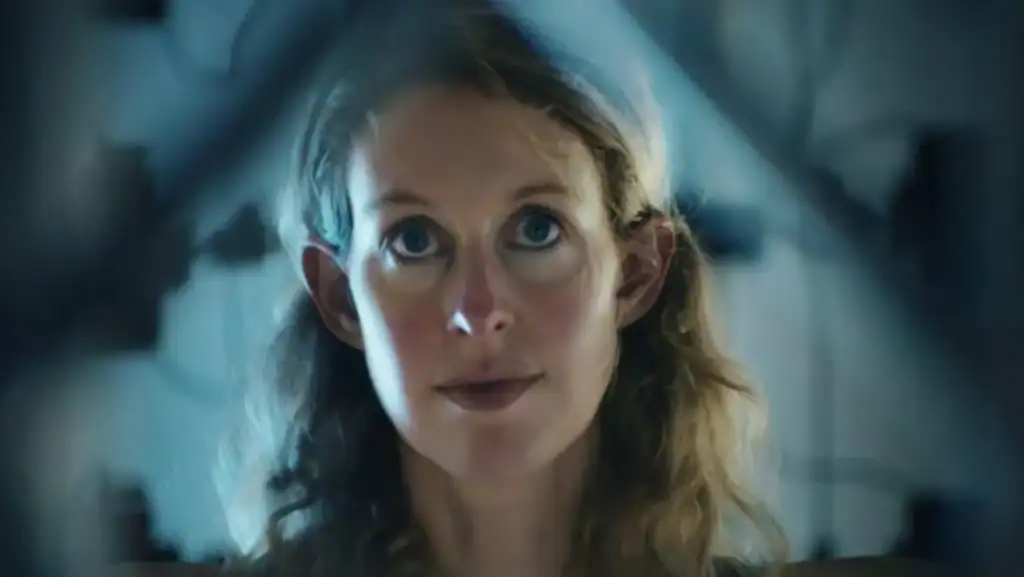
In the film’s first act, Fielder lives with Elizabeth Holmes and her family in their beachfront rental. Holmes has two young children with her partner, Billy Evans, a tech entrepreneur and heir to a wealthy hotel magnate. When Fielder moves in, only 34 days remain before she begins her prison sentence. Yet, with every conversation the deadpan provocateur has with Holmes, the answers range from oblivious to frustratingly circular.
A24’s You Can See Everything Plot
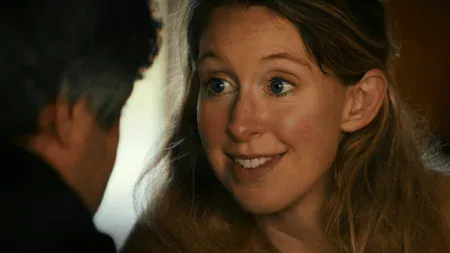
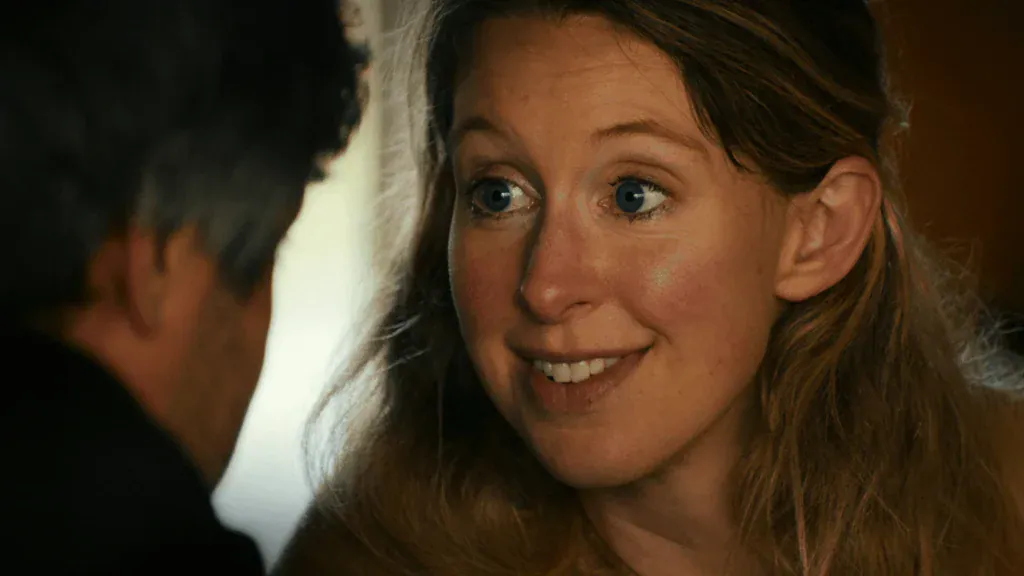
Holmes’s mannerisms reveal a delusionally sunny disposition that masks her blissful denial. In one of the documentary‘s best scenes, when Fielder keeps pushing the debate over the word “can,” the gap between a theoretical prototype and the actual science becomes obvious. For me, watching this unfold, it’s like claiming a pack of matches can cure cancer without having any evidence to demonstrate how that’s possible.
In a later image that shows Fielder’s humor, anyone who has seen Nathan For You knows what we are talking about: the Edison device that defrauded Theranos investors sits on a closet shelf, collecting dust. Any time the director tries to push the issue, Evans is there, trying to control the narrative; Holmes answers, even in an interview where Fielder talks to Evans’ business partner.
Some of the things that happen in You Can See Everything are so unbelievable that no one would believe them unless they saw them on tape. Frankly, most filmmakers don’t have the guts to do what Fielder and Oppenheim do here. You don’t believe me? How about the jaw-dropping revelation where Evans discusses his power of attorney over Holmes, licensing her image and likeness for AI-generated videos and Hollywood billboards.
A24’s You Can See Everything Review
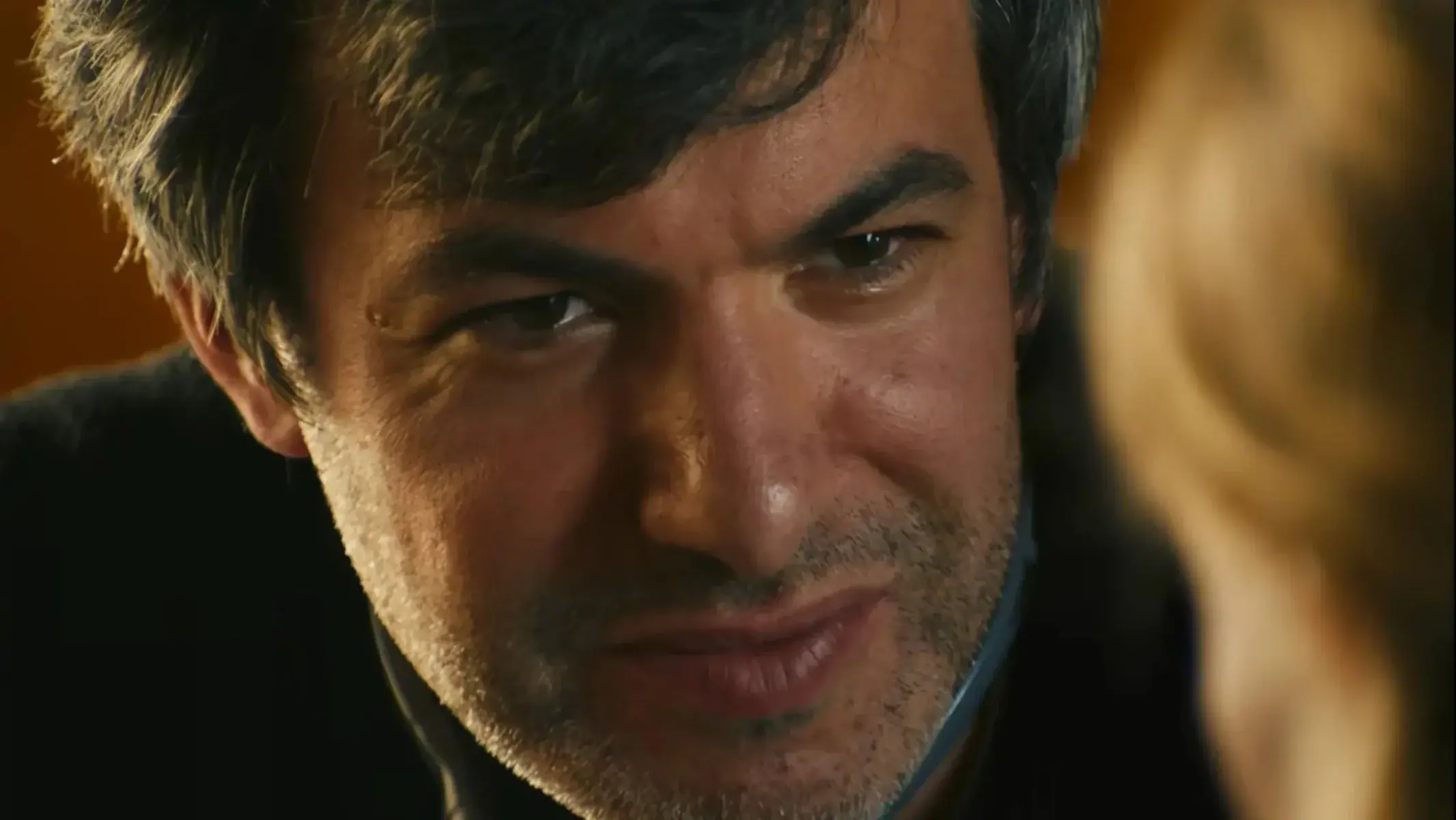
Oh, and then there’s the unlikely buddy pairing of Fielder and Amanda Seyfried, whom the filmmakers enlist to reenact scenes they couldn’t film. Fielder practically deputizes Seyfried as his partner on the case, attempting to dissect what’s true, what’s not, and what’s somehow stranger than either. Seyfried is breathtaking here, capturing Holmes’s delusional, sunny-denial facade; it’s almost scary, if not just uncanny.
I’m not sure about Oscar eligibility rules, since the film also seems intent on making a point about what constitutes truth in art, but Seyfried elevates the dramatic true-crime reenactments once seen on Unsolved Mysteries into something surreal and hypnotic. We also get a cameo from Christopher Abbott, who portrays Evans in scenes involving the film’s back-end profits, which is, again, unimaginative, to say the least.
Then we learn who’s really in control of Elizabeth Holmes’s social media accounts, as Seyfried confronts Evans about using Holmes’s infamy for his own financial gain. Somehow, the scene escalates from eye-opening to shocking to downright jaw-dropping as the two debate their social media missteps and the promotion of Charlie Kirk’s message. Again, it’s the kind of unbelievable scene you’d never expect to see in a documentary.
Is A24’s You Can See Everything Worth Watching?
Which brings me to my point: Is this a documentary film? A work of fiction? Or a hybrid unlike anything we’ve ever seen before? Fielder even turns the tables on the actress, examining why a fictional Hulu streaming series should be above reproach when it comes to the truth. This is a provocative question few filmmakers would dare to ask. The film even lets someone question Fielder’s own objectivity, focusing on his own artistic ambiguity.
Walking out of the theater after watching You Can See Everything, I thought, Only Nathan Fielder could make a documentary where the truth itself deserves an unreliable-narrator credit. I’m convinced this movie needs an emergency standby team of lawyers, agents, and publicists. Why? Because I have come to the conclusion that the film knows the most dangerous lies aren’t the ones we are told, but the truths we’ve convinced ourselves that we can no longer question.
You Can See Everything starts as a film about the truth about Holmes, then takes a fascinating evolution. This is hardly the only truth left to our imagination, which Fielder and Oppenheim seem to be examining. In a world where we continuously question the truth, the documentary reminds us that seeing everything and understanding anything are two very different things. Yet, let’s not mistake moral complexity for moral innocence. We know what happened, but Fielder and company take us down a fascinating road where no one is entirely innocent, and everyone is guilty of something. This is the year’s best film.
You can watch You Can See Everything exclusively in theaters on October 16th!
Surreal and hypnotic, You Can See Everything takes audiences down a fascinating road where no one is entirely innocent, and everyone is guilty of something. This is the year's best film.
-
GVN Rating
I am a film and television critic and a proud member of the Las Vegas Film Critic Society, Critics Choice Association, and a 🍅 Rotten Tomatoes/Tomato meter approved. However, I still put on my pants one leg at a time, and that’s when I often stumble over. When I’m not writing about movies, I patiently wait for the next Pearl Jam album and pass the time by scratching my wife’s back on Sunday afternoons while she watches endless reruns of California Dreams. I was proclaimed the smartest reviewer alive by actor Jason Isaacs, but I chose to ignore his obvious sarcasm. You can also find my work on InSession Film, Ready Steady Cut, Hidden Remote, Music City Drive-In, Nerd Alert, and Film Focus Online.